Why Do Ants Suddenly Appear in Bathrooms?
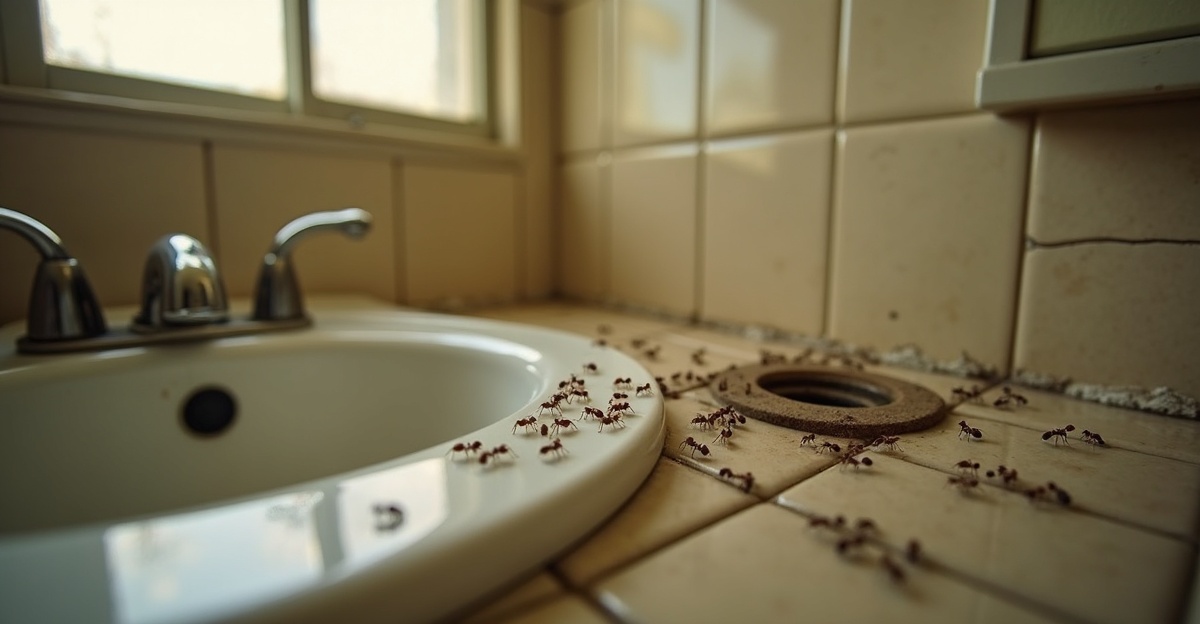
Ants often appear in bathrooms because of moisture, warmth, and small food traces like toothpaste or skin particles. Shifts in temperature and post-rain dampness make these spaces even more attractive to ants. Here in Southeast Idaho, seasonal transitions and older homes with weak spots like cracked tiles or leaky plumbing can invite these pests indoors.
Key Takeaways
- Ants find bathrooms appealing due to damp air, warm conditions, and organic particles such as toothpaste or dead skin.
- Southeast Idaho’s wet springs and aging building materials increase how often ants show up in homes.
- You’ll most likely run into moisture ants, odorous house ants, and pavement ants—each with distinct habits and nesting styles.
- Simple home fixes like sealing entry points, using vinegar-based cleaners, and repairing plumbing leaks can lower ant activity.
- If ants keep coming back, you might start asking where do ants come from in the bathroom—they may be nesting nearby. At that point, bringing in a pest control professional is a smart move.
What’s Behind the Sudden Ant Activity in Your Bathroom?
If ants suddenly appear in the bathroom, it often feels like they came out of nowhere. This is especially common during spring or right after a rainy stretch—just like when spiders are most active, due to similar shifts in moisture and warmth. While it may seem random, understanding ants in bathroom meaning can help you take smarter prevention steps.
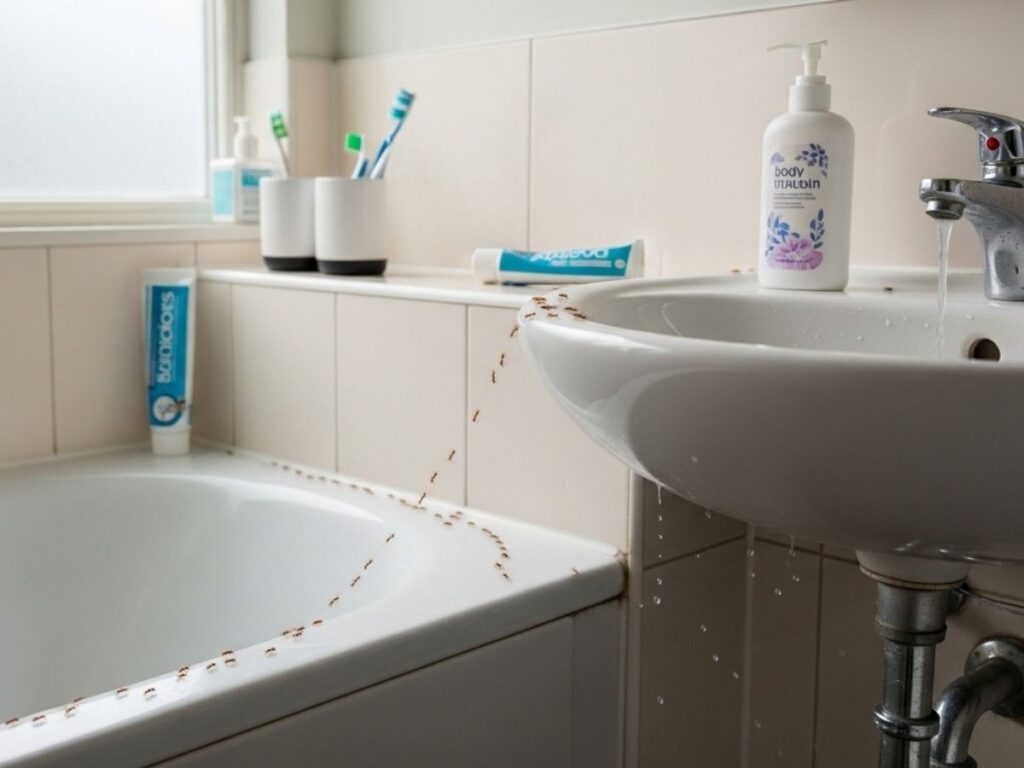
Bathrooms offer exactly what leads to ants in bathrooms causes such as water, warmth, and subtle food sources. Moist areas, dripping fixtures, and items like toothpaste or sweet-smelling body wash create an inviting space for ants. Even skin cells or hair tucked into corners can draw them in.
Certain conditions often trigger this activity:
- Recent rains—as explained by university entomology extension research on how ants respond to soil moisture changes—can trigger nesting shifts, which is why ants in bathroom after rain is a familiar issue.
- The first warm days after a long winter
- Leaky pipes, soggy grout, or leftover bathwater
These pests respond fast to comfort changes in their environment, much like how we wonder if spiders like heat or cooler spaces. So if you’re wondering why ants in bathroom suddenly, it’s likely a mix of small attractions combined with sudden shifts in moisture or temperature.
How Southeast Idaho’s Environment Plays a Role
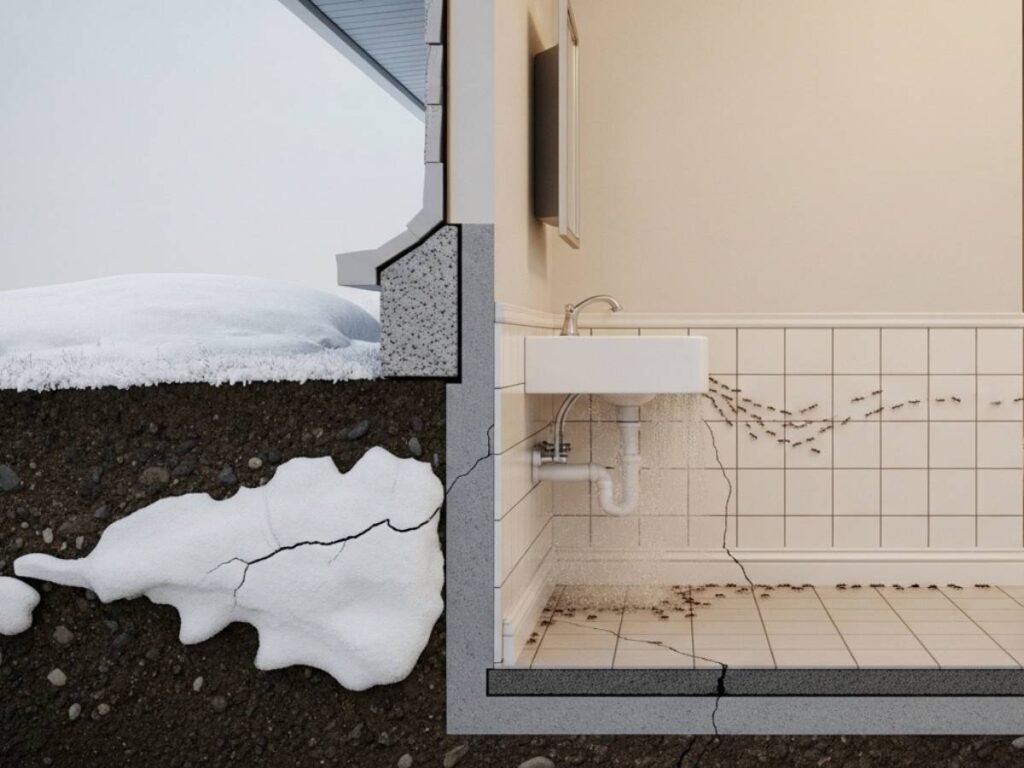
Across Southeast Idaho, we see ants show up more often in spring and fall—a pattern that aligns with regional precipitation data from the National Weather Service, which also tends to align with spider season. That’s when melting snow, wet ground, and warming indoor spaces invite activity, making ants in bathroom in winter a common occurrence. It’s a seasonal shift that, year after year, brings them indoors—especially into bathrooms, not unlike where spiders go in the winter time to stay warm.
Our local mix of older homes and rural settings makes this even more likely. Common contributing factors include:
- Aging plumbing with slow leaks
- Soil heavy with moisture from melted snow
- Poorly sealed windows, especially in basements or older bathrooms
- Cracks in foundations or tilework
Homes here in Idaho Falls, Rexburg, Rigby, and Blackfoot often share these conditions, leading to ants in bathroom during winter. That’s why we take a highly local approach with all our pest control in Idaho Falls and surrounding towns. Ant behavior isn’t the same everywhere—That’s why paying attention to the Southeast Idaho ants you’re up against helps us solve the problem at its root—just as knowing if spiders hibernate in the winter helps manage their presence.
What Attracts Ants to Bathrooms Specifically?
Ants follow three main needs—moisture, shelter, and access to organic materials—a principle outlined in Integrated Pest Management guidance from the U.S. Environmental Protection Agency. Bathrooms often provide all of these, which helps explain what are ants attracted to in the bathroom—even if things look clean on the surface.
Common Attractants in Bathrooms
Here’s what might be drawing them in without us realizing it:
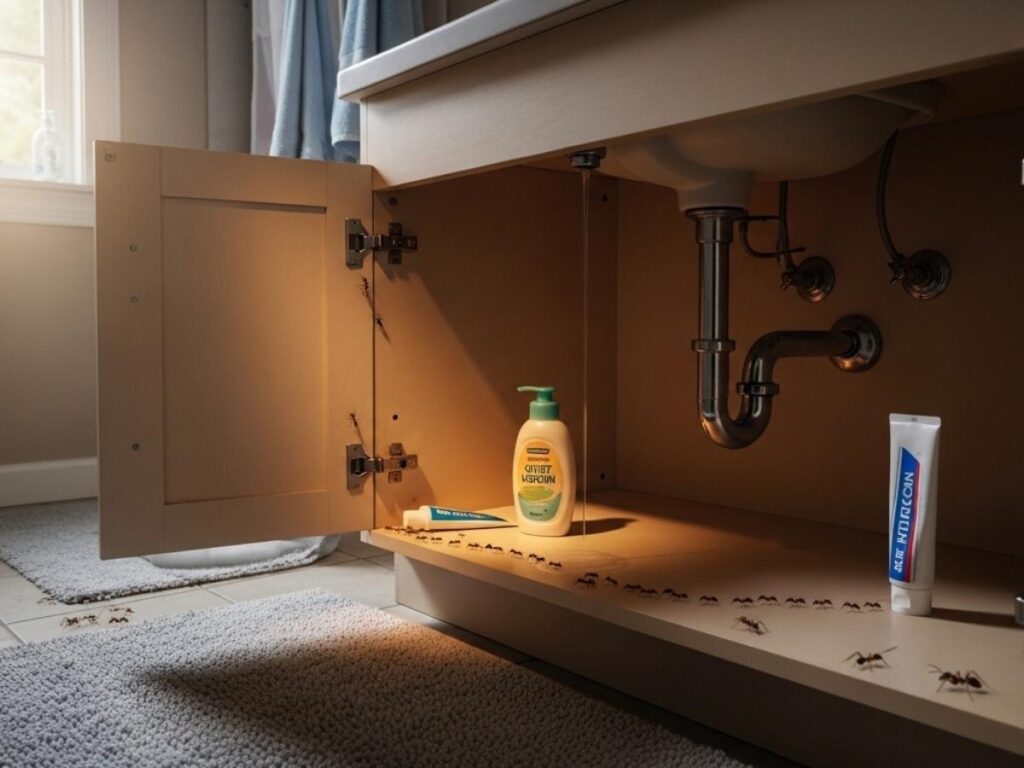
- Water from dripping sinks, tub edges, or damp rugs left on the floor
- Sugary or floral-scented soaps, lotions, or spilled toothpaste help answer why are there sugar ants in my bathroom.
- Dusty corners with skin cells, leftover hair, or even other small dead insects
Bathrooms also make for quiet nesting spots, which is why you might see ants in the bathroom tub lingering unnoticed. Warm areas beneath the sink or along baseboards offer safe harborage. If ants find a way in, even a bathroom that’s rarely used can be a long-term home.
To get a sense of what attracts ants into bathrooms, we often encourage homeowners to do a little searching in corners, under sinks, and behind items on shelves.
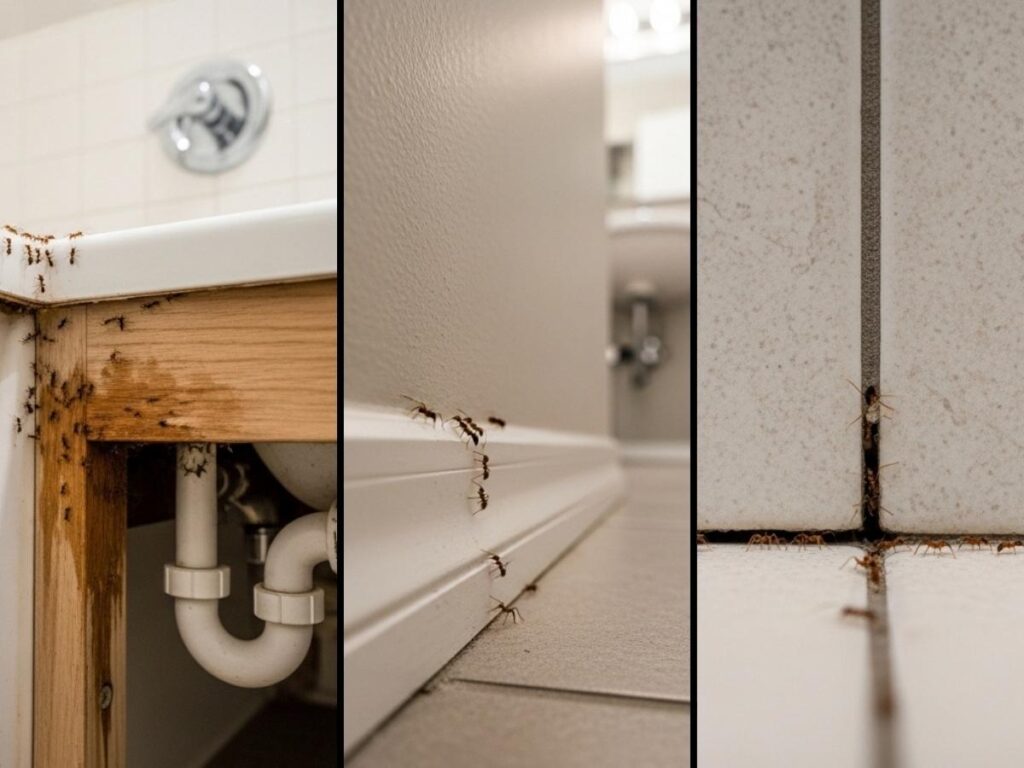
Common Types of Ants You Might See
We treat a few kinds of ants most often in this area. Understanding the type can give us clues about how they behave, how they got in, and what’s needed to stop them.
- Moisture ants—commonly identified by university extension entomology programs as wood-nesting ants attracted to damp, decaying material—are often drawn to leaks and plumbing areas. You’ll typically find them near tubs or water-damaged areas, and in some cases, you may notice ants coming out of the bathtub faucet.
- Odorous house ants: As the name suggests, they smell faintly like rotten coconut when crushed. They love nesting near sinks and behind walls.
- Pavement ants: These smaller ants squeeze into homes through foundation cracks or tile gaps. A loose tile or crack around a baseboard can become an entry point.
These ant types tend to return if we only get rid of what we see. That’s why addressing their hiding spots—behind walls or under floors—is just as important.
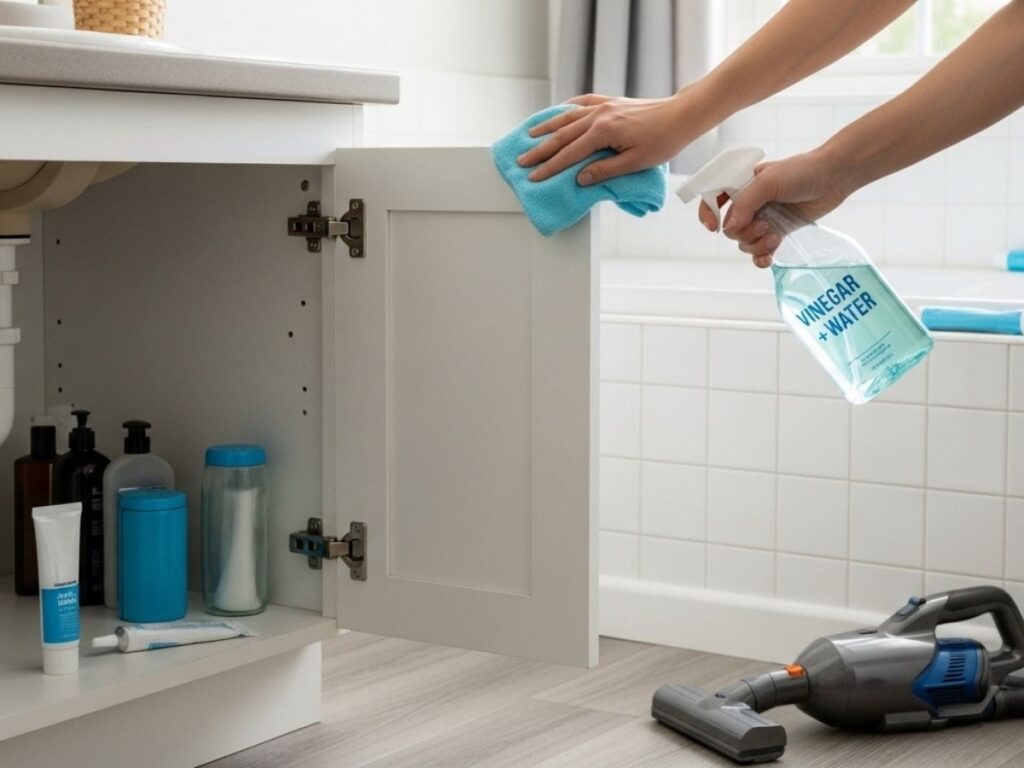
Child- and Pet-Safe DIY Tips to Keep Ants Away
We always want treatments that are safe for the whole family. Many first steps can be taken without worrying about fumes or harsh products—just focused cleaning and practical prevention.
Simple, Safer Measures You Can Take
Here’s a helpful home checklist that can discourage ants and reduce the risk of welcoming them back:
- Wipe down bathroom surfaces with a 50/50 vinegar and water mix to disrupt scent trails
- Seal any visible cracks along tile edges, window trims, or baseboards
- Tighten or repair leaky fixtures—especially under the sink or near the toilet base
- Keep cosmetic products sealed and avoid leaving open containers
- Sweep or vacuum floor edges regularly to remove shaving debris, skin cells, or insects
Using these bathroom pest prevention tips goes a long way when learning how to keep ants out of bathroom spaces. With consistent effort, we can reduce the food and water sources that keep ants coming back. That said, these are short-term defenses. If the colony is large or hidden behind bathroom walls or beneath floors, they’ll still find their way inside.
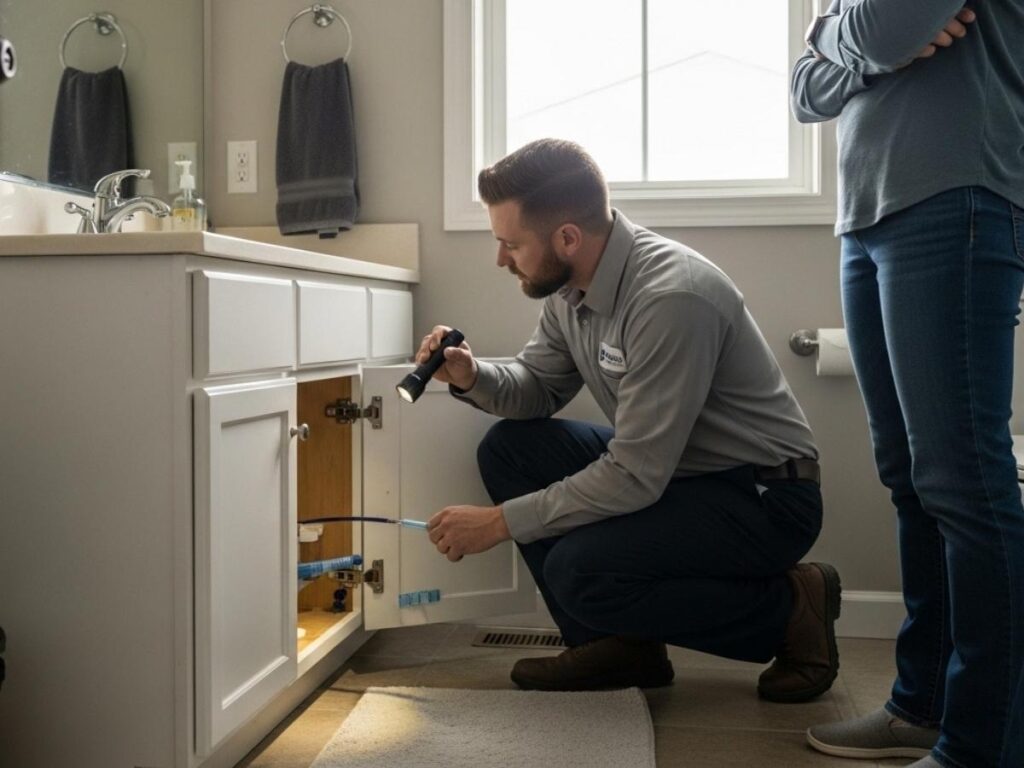
When It’s Time to Call for Professional Help
We know many folks want to handle pests on their own—and often that works for minor issues. But sometimes, a deeper root problem goes unnoticed. Here’s when calling in help makes sense:
- You wipe things down and still see ants reappearing in the same spots
- There’s a constant trail near pipes, fixtures, or bathroom corners
- You’ve spotted signs of water damage or heard faint rustling sounds inside walls
In these cases, it’s smarter and safer to let professionals take a look. We use targeted, low-impact approaches that fit into daily family life. Residential pest control isn’t just about treating what’s visible—it’s about understanding the structure of your home, the habits of the ants, and how moisture plays a role.
At DeWebb Pest Control, we live and work in the same small communities we serve. That’s why we approach every job with care and total transparency. To see what that experience looks like, check out what pest control companies do on the first visit. We walk homeowners through every step, listen to concerns, and make sure there are no surprises.
If you’ve given these steps a fair try and the ants are still around, we’re just a click or call away. We’ll zero in on the source, make a lasting plan, and help bring long-term peace back to your bathroom—and your home.
Frequently Asked Questions
Ants can appear overnight because they quickly follow moisture and scent trails once conditions change. A small leak, increased humidity, or recent rain can signal a new water source, prompting ants to explore. Bathrooms provide warmth and organic residue, so once a scout ant finds favorable conditions, others rapidly follow.
Ants in the bathroom often indicate excess moisture or hidden entry points rather than poor cleanliness. Leaky pipes, damp grout, or cracks in walls can support nearby nesting. While a few ants aren’t always serious, repeated activity may suggest a colony nesting behind walls or under flooring.
After rain, saturated soil can force ants to relocate to drier, more stable environments—a response documented in university research on ant colony behavior following heavy rainfall. Bathrooms offer reliable moisture without flooding, making them attractive shelter. Changes in barometric pressure and ground dampness can also disrupt outdoor nests, pushing ants indoors through small gaps.
Yes, some ants nest in wall voids, under sinks, or near plumbing where moisture is constant. Moisture ants and odorous house ants commonly build nests near water-damaged wood or insulation. This allows them to access bathrooms easily, even if you don’t see ants elsewhere in the home.
The best way to prevent ants is to remove moisture and block access points. Fix leaks, seal cracks around tiles and baseboards, and clean surfaces to remove scent trails. If ants persist despite these steps, professional treatment may be needed to eliminate hidden nests.