Do Wasps Sting More Than Once?

Many homeowners ask whether wasps can sting more than once. The answer is yes—they have smooth stingers that let them inject venom repeatedly without losing the stinger like a honeybee does. That ability means a single wasp, or several guarding a nearby nest, can strike several times within seconds. We see the risk rise for children, pets, and anyone with allergies, especially during peak late-summer activity in Southeast Idaho.
Key Takeaways
- Wasps can sting repeatedly because their smooth stingers do not detach after use.
- Yellow jackets and paper wasps in Southeast Idaho defend nests aggressively, especially in late summer when colonies reach their largest size.
- Multiple stings increase the total venom injected, which raises health risks for children, pets, and those with allergies.
- Most stings cause short-term pain, redness, and swelling, but breathing problems or facial swelling require immediate medical attention.
- Early nest detection, sealing entry points, and professional removal near high-traffic areas reduce the risk of repeated stings.
Do not modify or enhance the wording; the text must remain identical except for the HTML markup. Do not convert the first sentence or introductory text into a heading — it must remain a normal paragraph (<p>).
Yes—Wasps Can Sting Multiple Times (Here’s Why That Matters for Your Family)
Wasps can sting multiple times. In fact, many people are surprised to learn that wasps can sting again and again without harming themselves.
If we’ve ever wondered, “how many times can a wasp sting?” the honest answer is that there’s no fixed limit. A wasp can continue stinging as long as it feels threatened.
The reason comes down to anatomy. Wasps have smooth stingers, as explained by UC IPM research on wasp and bee stinger anatomy. Unlike honeybees, they don’t lose their stinger after attacking. That smooth design allows them to inject venom repeatedly without the stinger getting stuck in skin.
This is where confusion about wasp sting vs bee sting often happens. Honeybees have barbed stingers, according to PBS research explaining why honeybees die after stinging. Those barbs lodge in the skin, tear away from the bee’s body, and cause the bee to die after a single sting. Wasps are different. Do wasps leave their stinger behind? No. They keep it and can use it again.
That ability matters for safety. One wasp can deliver several stings in a short time. If a nest is disturbed, multiple wasps may attack at once. That increases the chance of repeated stings, especially around a wasp nest near house entryways or play areas.
Most stings happen because a wasp feels threatened. They aren’t out looking for people to sting. Still, understanding that they can sting more than once helps us take the right precautions and protect our families without panic.
Wasp Behavior in Southeast Idaho: Yellow Jackets and Paper Wasps
Here in Southeast Idaho, we most often see yellow jackets Idaho homeowners deal with and paper wasps Idaho families spot under eaves and rooflines. Both can sting multiple times. Both will defend their nests.
Yellow jackets are usually more defensive, especially in late summer and early fall. As their colonies grow, their need to protect food and territory increases. They’re also attracted to sugary drinks, garbage, and outdoor meals. That’s why backyard gatherings sometimes bring unwanted visitors.
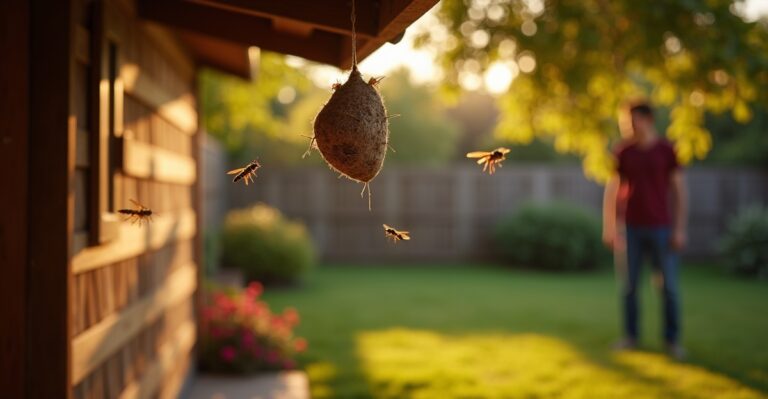
Paper wasps typically build umbrella-shaped nests under eaves, sheds, decks, and porch ceilings. They may seem calmer at a distance, but they will sting if their nest is disturbed.
Ground nests are common with yellow jackets. We often find them in yards, near fence posts, along foundations, and even in old rodent burrows. A hidden nest in a high-traffic area raises the risk of accidental contact.
Activity peaks in late summer because colonies are at their largest, as noted in Specter guidance on seasonal yellow jacket colony growth. More wasps means more defensive behavior. If we’re unsure what type we’re seeing, our guide on hornets and yellowjackets can help clarify the difference.
Are wasps dangerous? They’re protective insects. They don’t attack without reason. The risk rises when a nest is bumped, mowed over, or sprayed improperly. If we’re noticing repeat activity in one area, it’s worth reviewing why wasps keep coming back each summer.
When nests are close to homes, sheds, walkways, or play spaces, we recommend addressing them early before colonies expand.
Why Multiple Stings Increase Risk (Children, Pets, and Allergies)
A single sting is painful. Multiple stings increase the amount of venom introduced into the body. That’s where risk begins to climb.
Children, pets, older adults, and anyone with known insect sting allergies should be extra cautious. Smaller body size means venom can have a greater effect. Pets are especially vulnerable around ground nests because they may investigate with their noses or paws.
For most people, a normal reaction includes:
- Immediate pain
- Redness
- Swelling around the sting site
Symptoms usually improve within hours to a couple of days.
However, medical attention is needed if signs of an allergic reaction appear. Watch for difficulty breathing, swelling of the face or throat, dizziness, or widespread hives. Those symptoms require prompt care.
Even without allergies, disturbing a nest can trigger several wasps to sting at once. That’s why attempting to knock down or spray a large nest can quickly escalate into a painful situation.
Most stings are manageable. We don’t share this information to alarm anyone. We share it so our community understands that repeated stings raise the risk, especially in high-activity months.
How to Prevent Wasps Around Your Home
Prevention always works better than reaction. When we talk about how to prevent wasps around your home, we focus on simple, practical steps that reduce attraction and nesting areas.
Here’s what we recommend:
- Seal small gaps and cracks around siding, soffits, and rooflines. Early-season queens look for protected spaces to start nests.
- Keep trash cans tightly closed and clean. Food odors attract yellow jackets quickly.
- Avoid leaving sugary drinks, pet food, or uncovered snacks outdoors.
- Inspect eaves, sheds, decks, and fence lines in spring and early summer. Small nests are easier to handle safely than large colonies in August.
- Address nests early. Waiting allows colonies to grow and become more defensive.
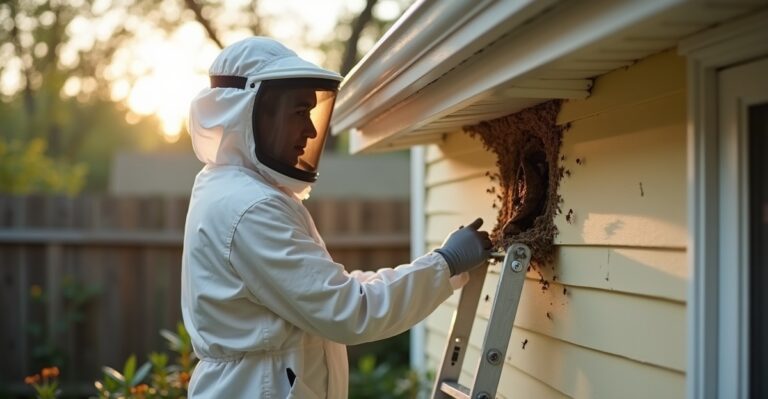
Never attempt to remove a large or active nest on our own. Spraying from a ladder or striking a nest often triggers aggressive defense. For guidance on safety considerations, our article on removing a wasp nest from your porch explains why caution matters.
If wasps are becoming a recurring issue, professional wasp control services can eliminate active nests and help prevent new ones. Ongoing residential pest control programs also help reduce conditions that attract stinging insects year after year.
When to Call Pest Control for Wasps in Southeast Idaho
Knowing when to call pest control for wasps can prevent painful encounters.
We recommend scheduling an inspection if we see:
- A visible wasp nest near house entrances, garages, porches, or rooflines.
- Ground nests in areas where kids or pets play.
- Repeated wasp activity around door frames, vents, or attic openings.
- Previous stinging incidents on the property.
Professional wasp control Southeast Idaho homeowners trust should focus on safety first. We use treatment methods that consider children and pets, and we explain every step clearly before we begin. No surprises. No pressure.
Our team proudly serves Rexburg, Idaho Falls, Ammon, Blackfoot, Rigby, Pocatello, and Ririe. If we’re unsure whether activity qualifies as a serious issue, we’re always happy to take a look and give honest feedback. Families can contact our team for straightforward advice and an inspection.
Frequently Asked Questions
Yes, wasps can sting multiple times in a row because their stingers are smooth and do not detach after use. This allows them to inject venom repeatedly if they feel threatened. A single wasp can sting several times within seconds, and if a nest is disturbed, multiple wasps may attack at once, increasing the likelihood of repeated stings.
Wasps can sting multiple times because their stingers are smooth and remain attached to their bodies after stinging. In contrast, honeybees have barbed stingers that become lodged in skin and tear away from the bee’s abdomen, causing the bee to die. Since wasps keep their stinger, they can continue defending themselves or their nest with repeated stings.
Multiple wasp stings increase the amount of venom entering the body, which raises the risk of stronger reactions. Most people experience pain, redness, and swelling that improve within a few days. However, several stings at once or stings in sensitive areas can cause more severe symptoms, especially for children, pets, older adults, or individuals with insect sting allergies.
No, wasps do not leave their stinger in the skin after a sting. Their stingers are smooth and designed to withdraw easily, allowing them to sting again if necessary. This differs from honeybees, whose barbed stingers become stuck in the skin. Because the wasp keeps its stinger, it can deliver repeated stings during a defensive encounter.
If you are stung by a wasp multiple times, move away from the area quickly to avoid additional stings. Clean the sting sites with soap and water, apply a cold compress to reduce swelling, and consider an over-the-counter antihistamine for itching. Seek medical attention immediately if symptoms such as difficulty breathing, facial swelling, or dizziness appear.