Can Mosquitoes Breed in Small Puddles?
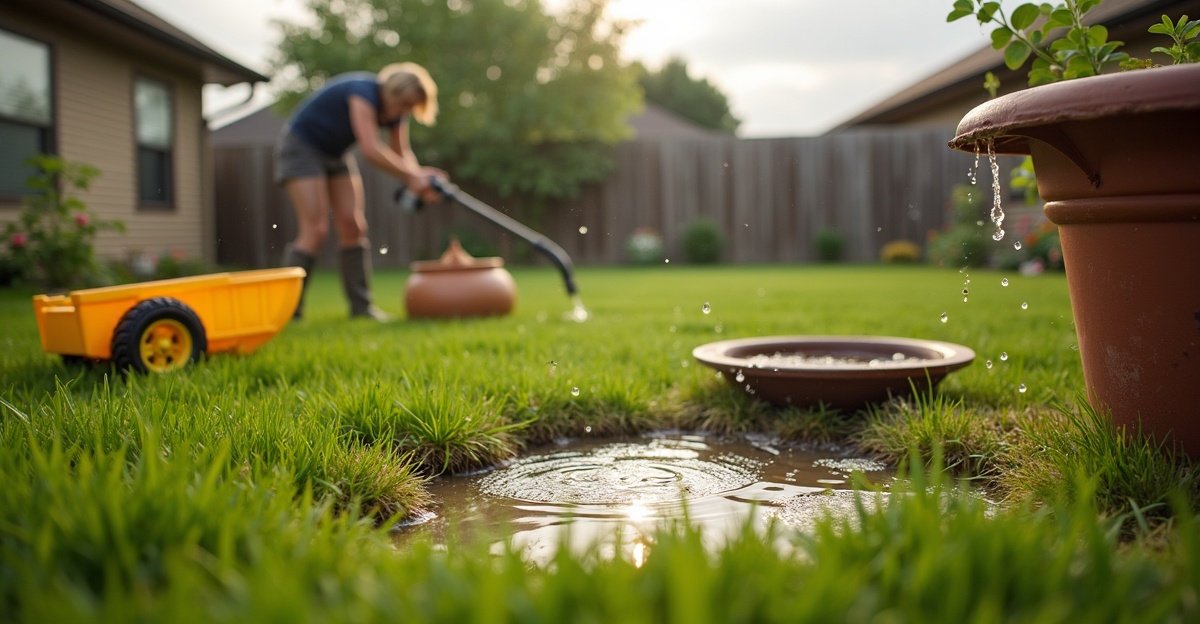
Mosquitoes breeding in puddles—even the tiny ones—is a real concern in Southeast Idaho. Warm temperatures and consistent watering create the perfect setup. Any shallow water, like what’s left behind by sprinklers, toys, or a blocked gutter, gives mosquitoes space to lay eggs and multiply fast—within a week.
Key Takeaways
- Mosquitoes don’t need much water to breed. Even the small pools left by sprinklers or light rain are enough.
- Common backyard items like toys, planters, and pet bowls gather water easily and often go unnoticed, creating hidden breeding spots.
- In warmer months, mosquito eggs can turn into adults in just 7 to 10 days.
- Regular checks around the yard and quick changes—like turning items upside down or draining excess water—help avoid mosquito issues without extra risk.
- If mosquitoes still show up after prevention steps, it might be time to bring in a professional to find spots we’re missing.
Yes, Even Small Puddles Can Be a Problem
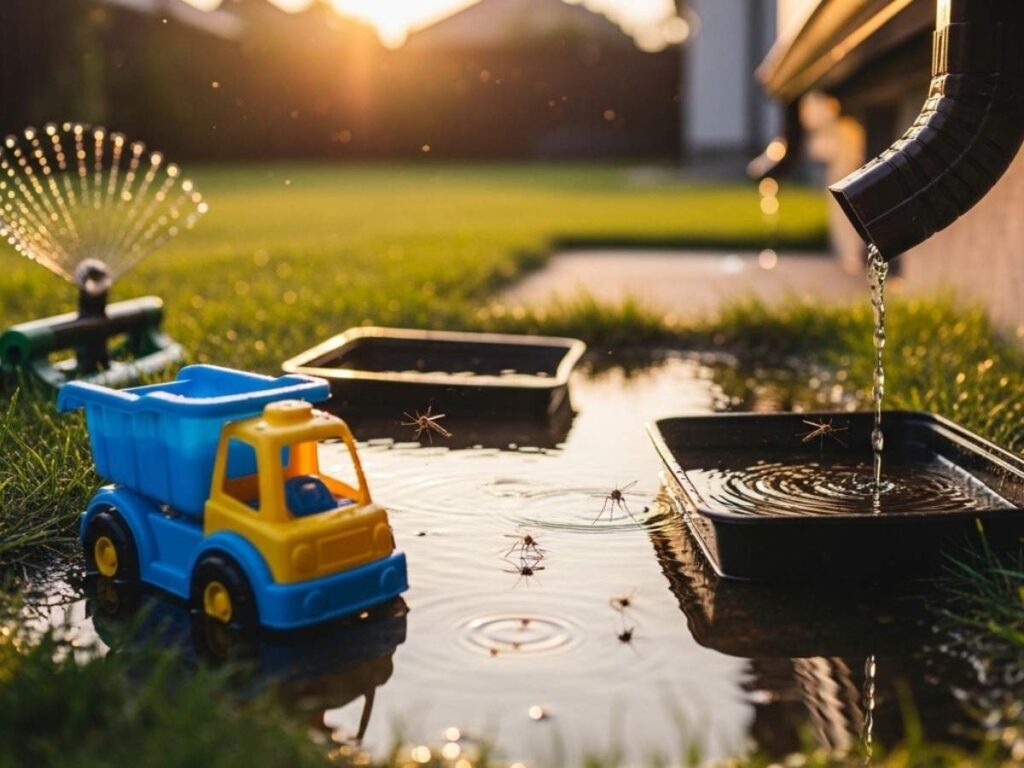
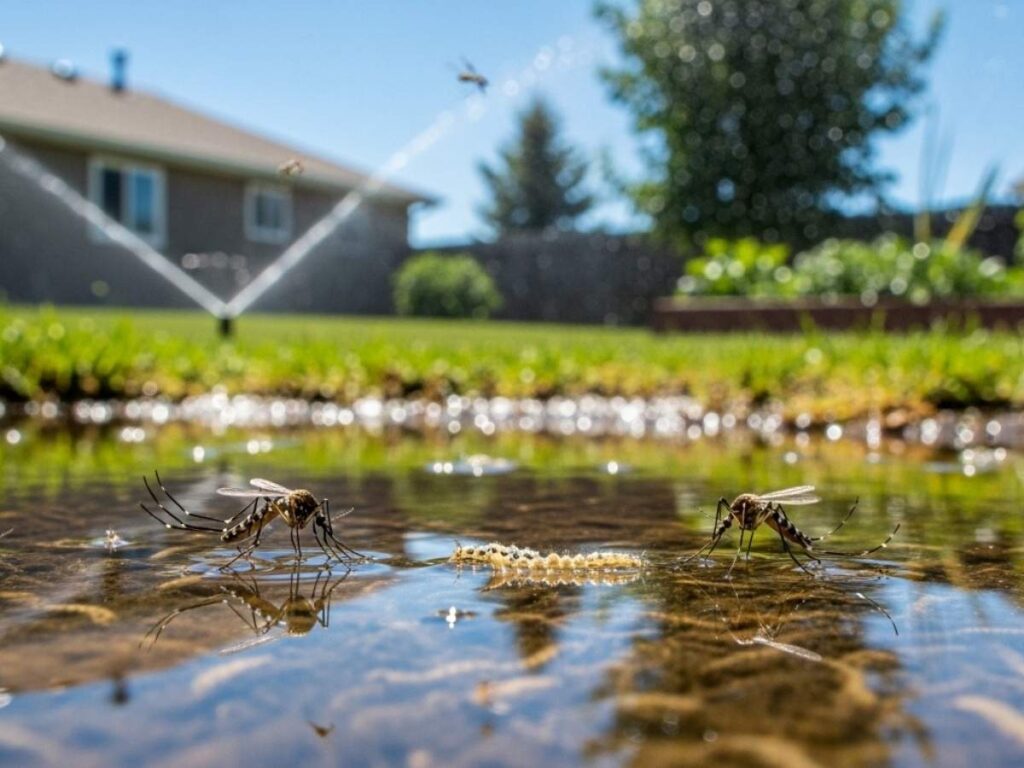
Yes, mosquitoes breeding in puddles is more common than many people realize, as they can breed in surprisingly small amounts of standing water—including puddles left behind by sprinklers or rainfall. They only need a few days and, according to the CDC, mosquitoes can breed in as little as a bottle cap’s worth of standing water, to start the process.
That means even quick afternoon thunderstorms or morning sprinkler runs can leave behind enough water to attract mosquitoes. Items we often overlook—like children’s toys, planter trays, runoffs from irrigation, or clogged gutters—can all turn into mosquito nurseries without us realizing.
During our Southeast Idaho summers, the combination of unexpected rain and heavy watering creates many of these small, temporary puddles, a pattern also noted in seasonal mosquito guidance from Idaho public health officials. If they’re sitting there for even a handful of days, they’re plenty suitable for more mosquitoes. And more bites.
How Mosquitoes Actually Breed (and Why It Matters in Idaho)
Mosquitoes have a pretty simple lifecycle, and it all starts with water. Female mosquitoes lay eggs directly on standing water—anything that doesn’t drain or move. Those eggs hatch into larvae, also known as wrigglers, which grow rapidly and become adult mosquitoes in just 7 to 10 days under warm conditions, as outlined by university entomology programs studying mosquito life cycles.
That’s why any puddle sticking around for more than a couple of days becomes a risk. The mosquitoes don’t need a pond or swamp to get going. They only need still water and a bit of patience.
Warm summertime temperatures make this process even faster. And in Southeast Idaho, where outdoor watering is common and temperatures rise early in the season, conditions are prime for mosquito breeding.
By understanding how mosquitoes breed and what makes up common mosquito breeding grounds in Idaho, we’re better equipped to stop them before they become a problem.
Where to Look: Sneaky Breeding Spots Right in Your Yard
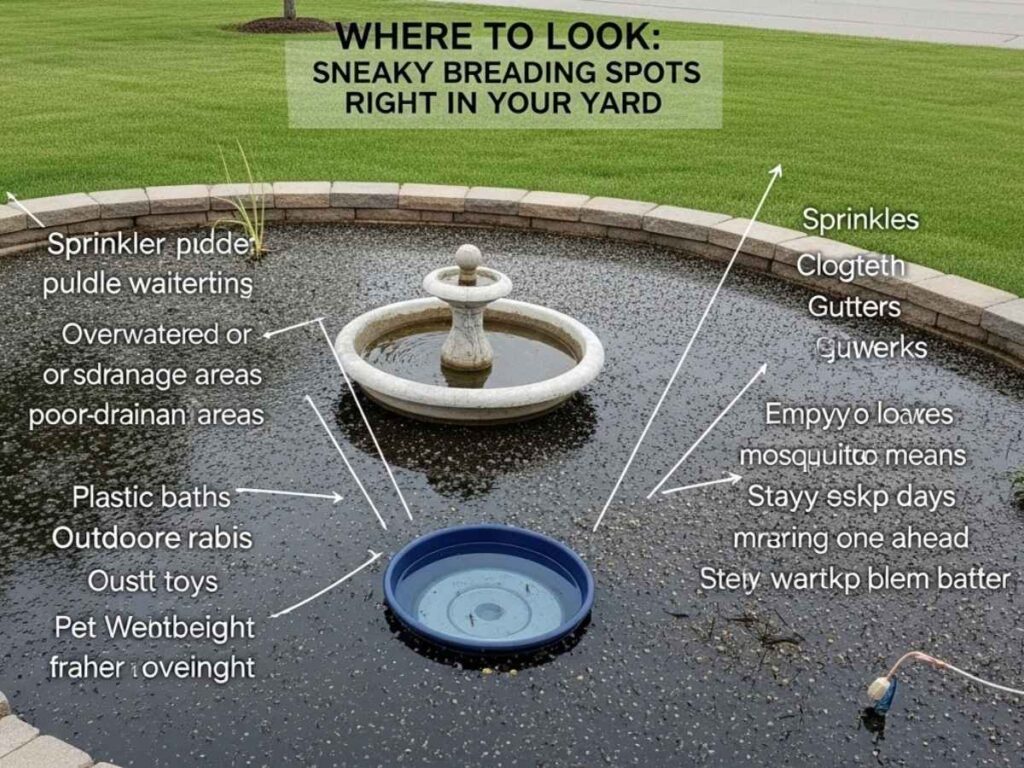
It’s easy to walk past places where mosquitoes are quietly growing—especially right after watering, rain, or during your usual backyard routines. Here in places like Rexburg, Idaho Falls, and Ammon, we’ve seen it all. Often, folks don’t realize just how many potential breeding zones are scattered across an otherwise tidy yard.
Watch out for these mosquito breeding grounds
- Sprinkler puddles near foundations or sidewalks
- Overwatered grass or poor-drainage areas
- Clogged or tilted gutters
- Bird baths, outdoor fountains, and decorative pots
- Plastic toys left out after rain
- Pet water bowls left out overnight
- Empty wheelbarrows or planters collecting rainwater
These small water pools don’t look dangerous. But once they sit for a few days, they can support standing water mosquito larvae. Staying one step ahead means spotting and draining them before mosquitoes do.
If you’re unsure why mosquitoes won’t leave your yard alone, take a look at this guide on yard types mosquitoes prefer. It may be just what you need to clear things up.
Simple, Safe Prevention Tips for Families with Kids and Pets
We know safety is a top concern—especially if you have curious kids or outdoor-loving pets. Fortunately, yes, you can cut down on mosquitoes without relying only on sprays or harsh chemicals.
A few easy changes go a long way in preventing a mosquito problem:
Child- and pet-safe mosquito prevention tips
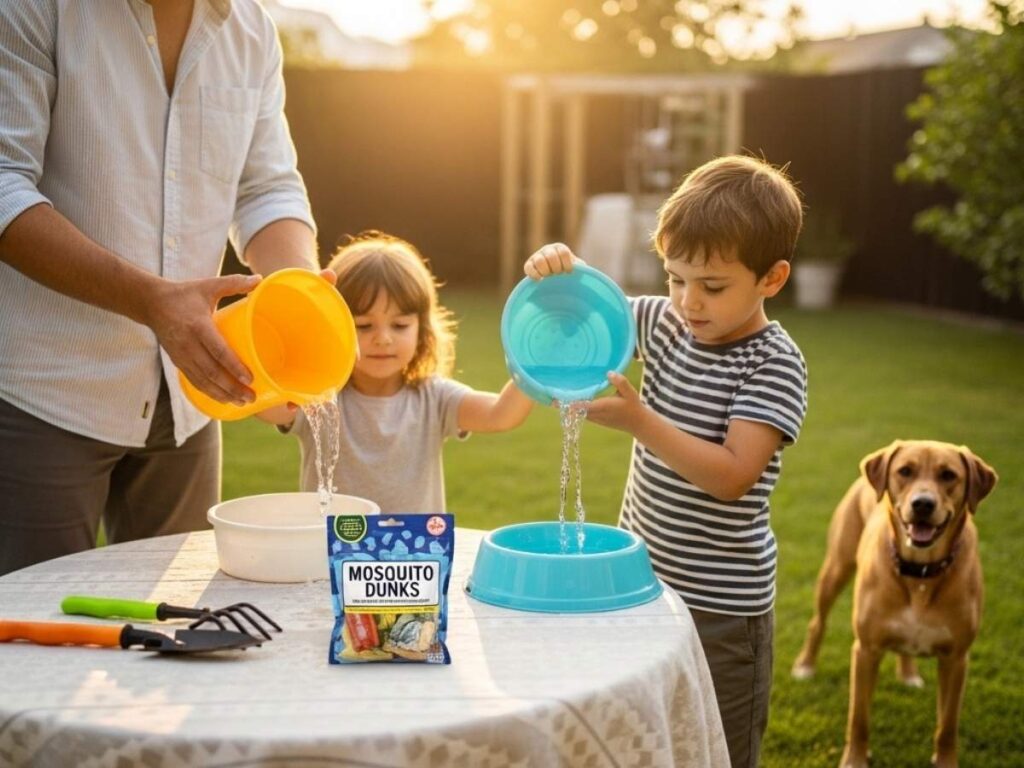
- Dump out kids’ toys, pets’ water bowls, and sandbox lids after rain
- Add drainage holes to anything that might collect water (pots, bins, etc.)
- se mosquito dunks in standing water sources you can’t eliminate—these contain BTI, a naturally occurring bacteria that the EPA recognizes as safe for use around people and pets.
- Take a five-minute walk around your yard each week to spot and fix drainage or puddling issues
By far, the most important step is to remove standing water to prevent mosquitoes from breeding in the first place. That’s your best bet to enjoy your yard with fewer bites—and less worry during those family BBQs and evening play times.
When It’s Time to Call in a Professional
Sometimes, no matter how many puddles we fix or toys we drain, mosquitoes keep coming back. If the issue seems larger than you can tackle with a watering can and a weekend, that’s when we recommend a professional look.
Here in Southeast Idaho, we’ve helped families and property owners work through:
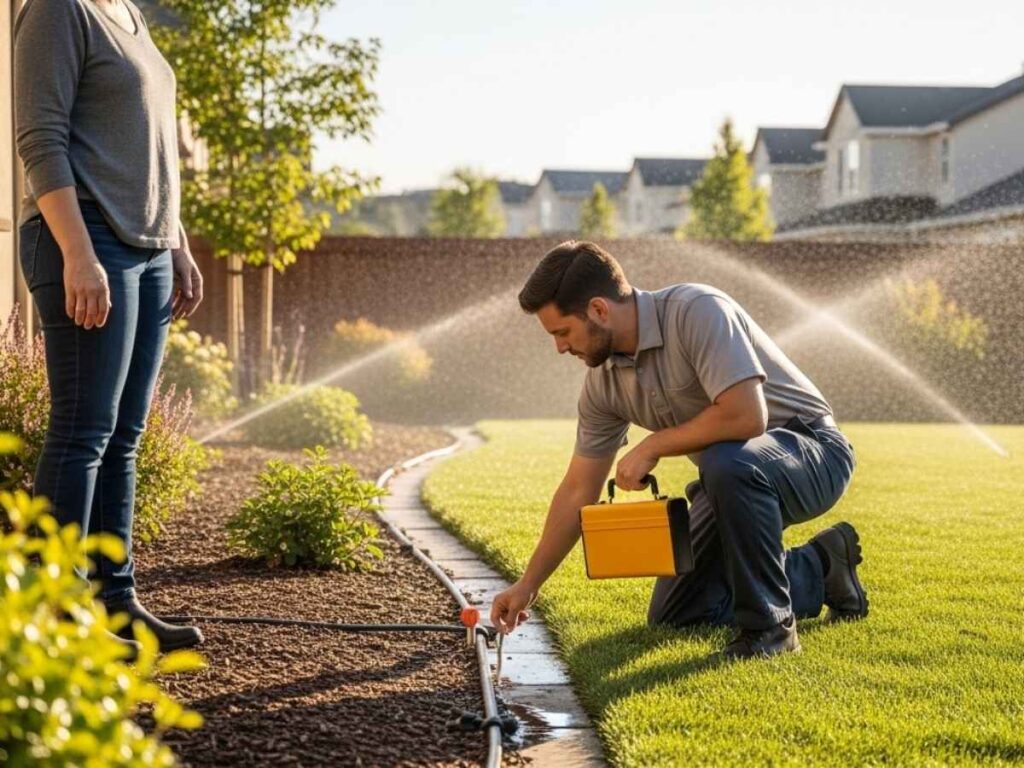
- Drainage challenges on bigger or uneven lots
- Irrigation setups that encourage water to pool
- Frequent mosquito activity with no obvious breeding site
- Long-term prevention strategies using people- and pet-safe options
Every yard’s different. And at DeWebb, our team lives right here in the community, so we know where mosquitoes like to hide and how to deal with them. Many of our neighbors mention in DeWebb Pest Control reviews how helpful that local insight can be.
If you’d like to know what to expect from a visit, take a look at what pest control companies do on the first visit.

Let’s Keep Your Yard Comfortable and Worry-Free
Outdoor time shouldn’t come with itchy bites and buzzing frustrations. If mosquitoes are making it hard to enjoy your yard, we’re here to help—with experience, care, and solutions that really work.
Have a question about puddles, eggs, or which prevention step comes next? Want an expert set of eyes on your backyard? We’re only a short drive (or call) away.
Contact DeWebb Pest Control today for expert insight and friendly service—from folks who know Southeast Idaho like you do. No pressure, just peace of mind.
Whether we’re working with families, landlords, or local businesses, our goal’s the same: keep outdoor spaces bite-free, safe, and simple to enjoy.
Frequently Asked Questions
Yes, mosquitoes can breed in extremely small puddles of standing water. Even a shallow amount left by sprinklers, rain, or drainage can support egg-laying. If the water remains still for several days, it can allow mosquito larvae to develop quickly, especially during warm weather.
Mosquitoes can complete their life cycle in as little as 7 to 10 days. Eggs laid in standing water hatch into larvae, then pupae, and finally adult mosquitoes. Warm temperatures speed up this process, making short-lived puddles a real risk if not drained promptly.
Mosquitoes prefer still, shallow water that doesn’t drain or move, as explained in university extension guidance on mosquito breeding habitats. Common problem areas include sprinkler runoff, clogged gutters, compacted soil, low spots in lawns, and water collected in outdoor items. Clean-looking water can be just as attractive as dirty water.
Sprinklers can contribute to mosquito breeding if they leave behind standing water. Overwatering, uneven coverage, or poor drainage can create puddles that last several days. Adjusting watering schedules and fixing drainage issues helps reduce the chance of mosquitoes breeding in these areas.
The most effective way is to eliminate standing water. Regularly inspect your yard, drain puddles, fix drainage problems, and empty items that collect water. If water can’t be removed, using mosquito dunks with BTI can prevent larvae from developing without harming people or pets.