Do Mosquitoes Prefer Certain Types of Yards?
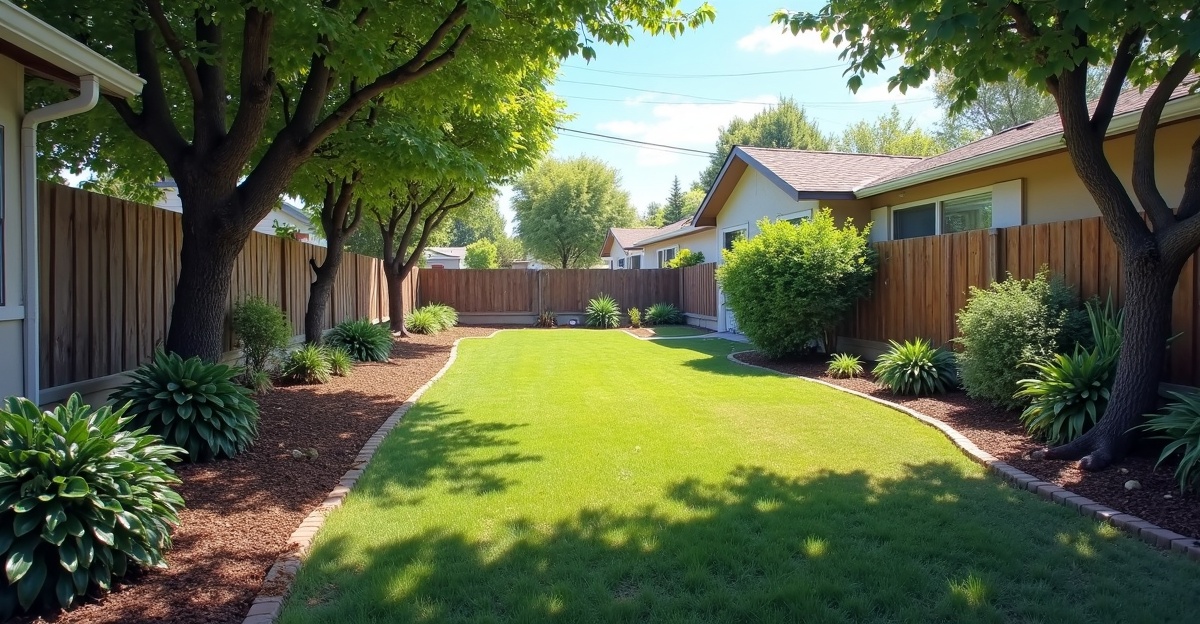
Some properties deal with far more mosquitoes than others. Understanding why mosquitoes in some yards are worse than others helps us regain control of our outdoor areas. Elements like pooled water, heavy shade, and Southeast Idaho’s soil and irrigation methods create prime conditions for mosquito breeding.
Key Takeaways
- Mosquitoes prefer spaces with still water, overgrown plants, and damp, shady locations.
- Problem areas often include clogged gutters, forgotten toys, birdbaths, and spots with poor water runoff.
- The dark soil and canal-based irrigation in Southeast Idaho keep many areas moist, luring mosquitoes in.
- Small changes—like adjusting how often we water, trimming dense plants, and adding water circulators to ponds—can noticeably drop mosquito numbers.
- If home methods fall short, a local expert can find hidden breeding spots and offer safe, effective treatments.
What Makes a Yard a Mosquito Magnet?
Mosquitoes aren’t random visitors—they’re drawn to specific things in your yard. Certain features act like open invitations for them to settle in, breed, and bite. Understanding what attracts mosquitoes to yards helps us prevent them from turning our outdoor spaces into picnic grounds.
Top Yard Features That Attract Mosquitoes
Keep an eye out for these mosquito-friendly conditions:
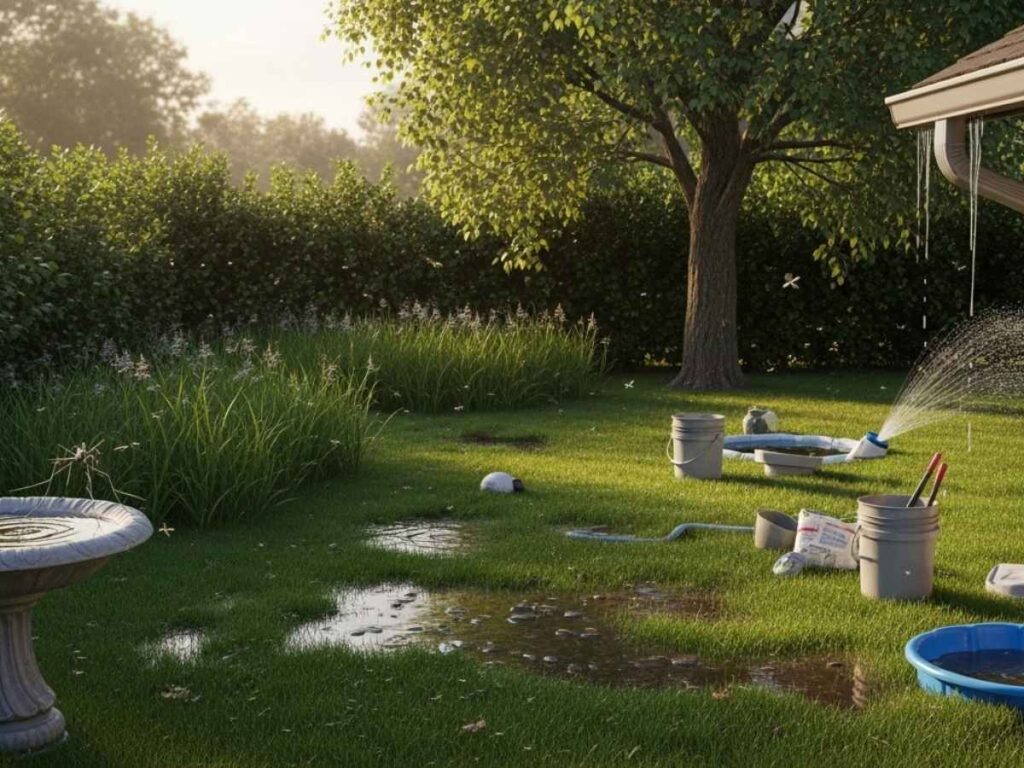
- Standing water: Mosquitoes breed in shallow, still water. Clogged gutters, birdbaths, empty flowerpots, puddles, pet bowls, and leftover irrigation water are all major hotspots. Even a bottle cap of water can become a breeding site, as the CDC explains that mosquitoes can lay eggs in extremely small amounts of standing water.
- Thick vegetation and shade: Dense shrubs, tall grass, and overgrown trees offer cool, damp shelter where mosquitoes rest during the day, a behavior commonly described in university extension research on mosquito resting habits.
- Soggy lawns or poor drainage: If your yard holds water after rain or watering—due to low spots, compacted soil, or poor grading—it gives mosquitoes the damp ground they love.
- Excess watering: Over-irrigation from sprinklers or canal-fed systems, particularly common in Southeast Idaho, leaves your lawn perpetually wet.
- Yard clutter: Unused kiddie pools, buckets, tarps, and toys catch and hold water. These often go unnoticed but are perfect breeding grounds.
- Stagnant ponds or fountains: Water features without a circulation pump can quickly attract egg-laying mosquitoes.
All of these issues contribute directly to increased mosquito activity. Thankfully, a few outdoor tweaks can help reclaim your yard.

How Southeast Idaho’s Unique Conditions Contribute
Southeast Idaho’s charm brings with it a few mosquito challenges. Our region’s soil, watering habits, and yard layouts often create mosquito-friendly environments even when lawns look well-maintained.
Rural homes near fields, canal ditches, or livestock areas tend to deal with heavier mosquito traffic. That’s because mosquitoes can breed in the still water found in irrigation channels or stock tanks. Many properties across this region rely on canal-fed or flood irrigation, which can lead to unavoidable damp patches—perfect for laying mosquito eggs.
The soil here also plays a part. Our darker soils, especially in spots across Idaho Falls, Blackfoot, and Rigby, hold on to moisture. This slows evaporation after rain or irrigation and keeps lawns damp longer.
Shaded areas, especially in older neighborhoods with tall trees and dense gardens, create the cool, protected environment mosquitoes need during the heat of the day.
For more on how this impacts you, check out this guide on how dangerous mosquitoes can be during Southeast Idaho summers.
Simple, Safe Fixes You Can Try Today
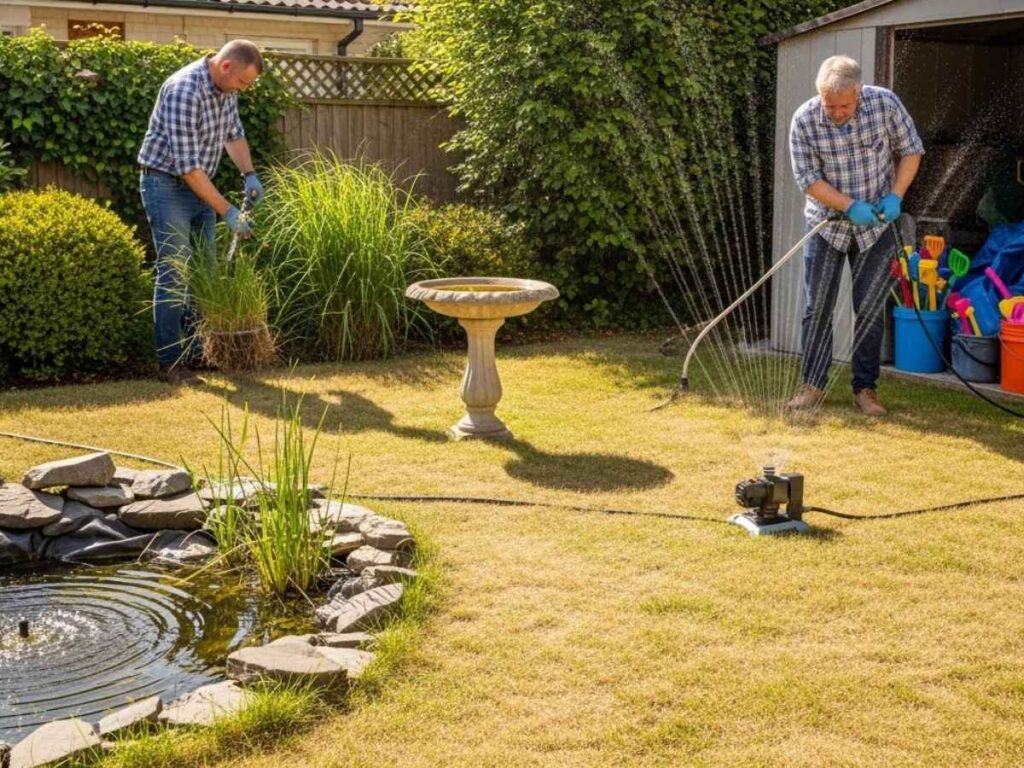
You don’t need a complete overhaul to make your yard less appealing to mosquitoes. Small changes go a long way. These are fast, safe tips that are easy to keep up with—even during busy weeks.
- Refresh standing water every couple of days—birdbaths, watering cans, and pet dishes should never sit stagnant for long.
- Trim grass, shrubs, and tree branches to reduce resting spots.
- Tweak your watering routines to avoid soggy patches. Walk your yard after watering to spot oversaturated areas.
- Fill low or uneven lawn spots with sand or gravel to prevent puddles.
- Use small circulation pumps for ponds or install mosquito dunks, which rely on EPA-recognized Bacillus thuringiensis israelensis (Bti) for mosquito control, as a safe treatment.
- Store outdoor toys, buckets, and tarps in a shed or garage to prevent water collecting.
- Clean out gutters and check that they flow properly—with downspouts angled away from your foundation.
All of these improvements help with mosquito prevention for backyards while keeping your yard healthy and kid- or pet-friendly.
Not Sure What’s Attracting Mosquitoes? Check These Hot Spots
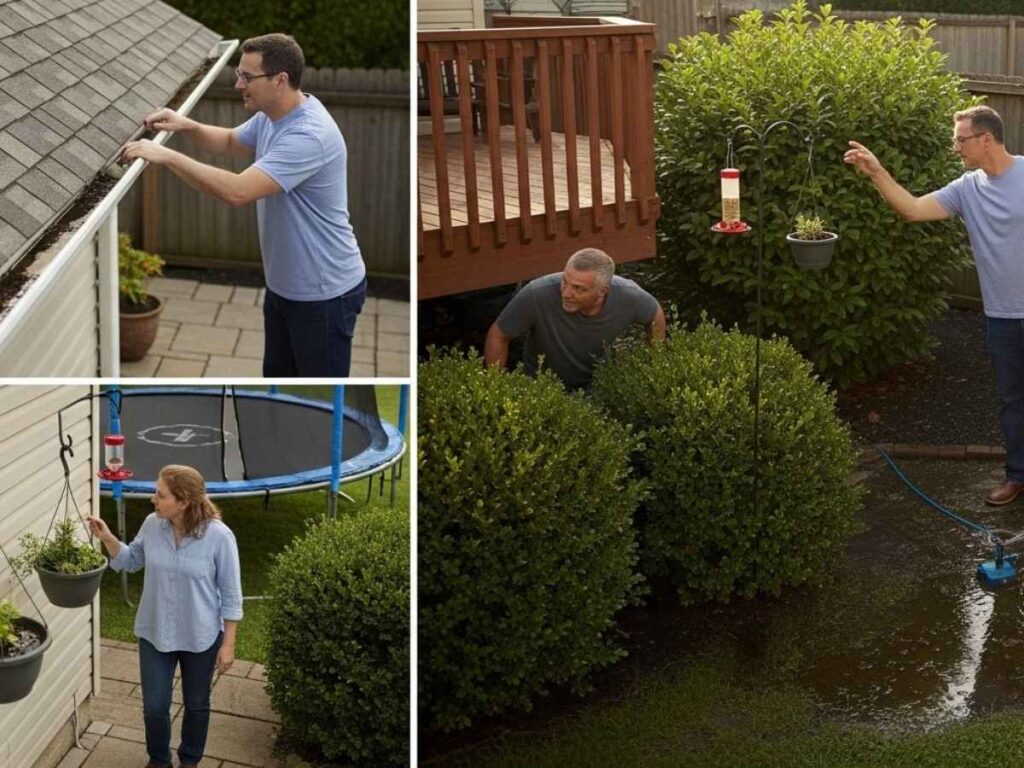
Sometimes the problem’s not obvious. Here’s a quick checklist to help you inspect your yard for hidden mosquito spots—no tools needed, just a quick visual scan:
- Examine gutters and downspouts for clogs or leaks.
- Walk around shaded areas under bushes or near dense trees.
- Check where sprinkler runoff pools—especially along lawn edges.
- Look under trampolines, decks, or playhouses that block sunlight and trap moisture.
- Inspect water troughs or barrels in use for livestock or rural garden care.
- Visit north-facing flower beds with dense shade and slow-drying soil.
- Take a look at hanging planters, bird feeders, or lawn ornaments that might catch water.
Spending a few minutes checking these places can reveal exactly what attracts mosquitoes to yards like yours. If nothing obvious turns up, mosquitoes might be coming from next door—or nesting beyond the fence but enjoying your space.
When to Ask for a Professional’s Help
If mosquitoes stick around no matter what you do, it might be time for extra support. Sometimes, standing water is hidden underground, or you’re facing a community-level issue with no easy DIY fix.
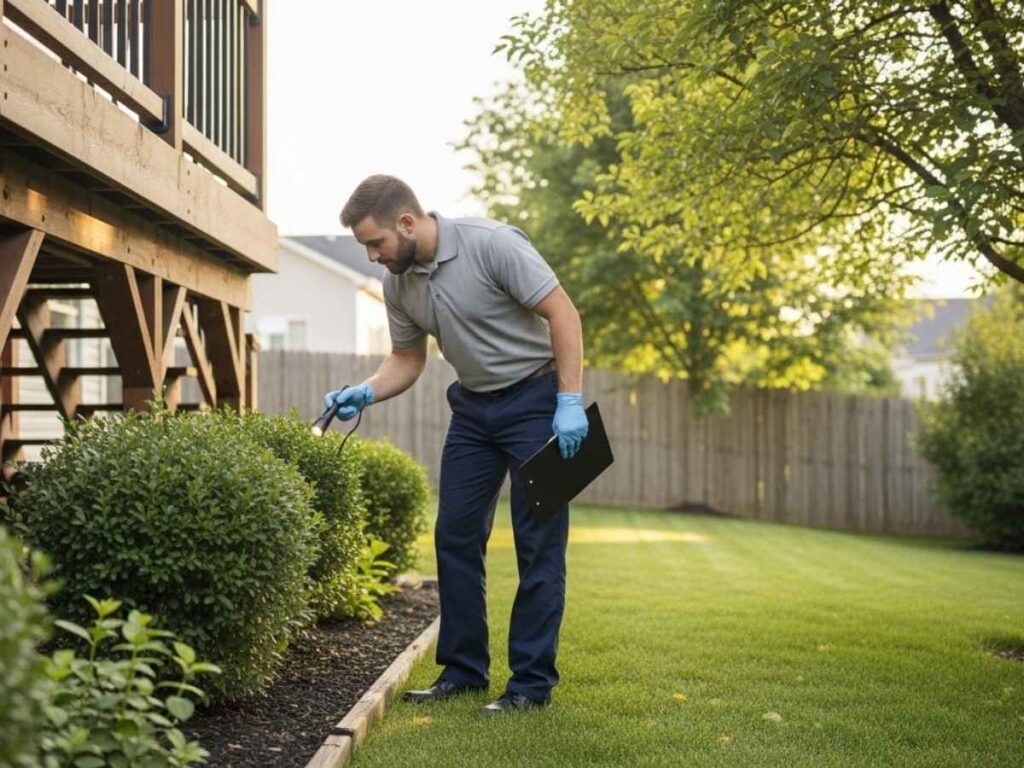
Our team knows where mosquitoes hide and how to safely treat those areas—including shaded foliage, under decks, and lawn zones where they rest. We use proven solutions that are safe for your kids, pets, and garden beds.
Many folks across Idaho Falls, Rigby, Ammon, and nearby towns rely on our experienced crew. We always start with a proper mosquito yard assessment—never unnecessary treatments. If you’re wondering if it’s time to call in help, we can offer advice with no pressure.
It’s easy to explore DeWebb Pest Control’s mosquito services here for details on seasonal support, pricing, and what to expect.
Working with a Local Team That Understands Your Yard
Mosquito control works best when it fits your home—not just any home. That’s why it helps to work with a neighbor who understands Southeast Idaho yards inside and out.
At DeWebb, we’ve spent years learning the ins and outs of local irrigation systems, rural drainage quirks, and shaded landscapes. We’re proud to offer residential pest solutions that prioritize safety and comfort all season long.
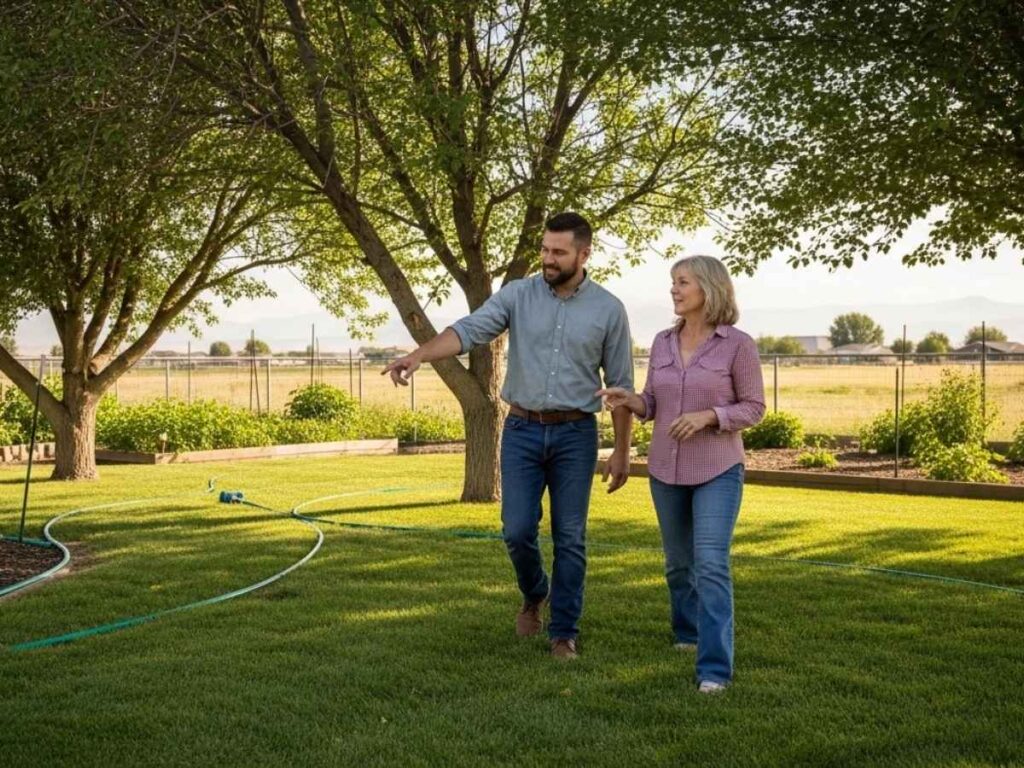
We’ll walk your property with you, explain our plan clearly, and never push treatments you don’t need. Plus, we offer seasonal packages that bring consistent protection, especially helpful for families who want peace of mind without the effort.
If you’d like to know what’s included in our general service, here’s an easy breakdown of what’s included in general home pest protection.
Or skip straight to scheduling a no-pressure consultation by reaching out to our team today. We’re here to help keep your space simple, safe, and bug-free—the way it’s meant to be.
Frequently Asked Questions
Mosquitoes are worse in certain yards because those spaces offer better breeding and resting conditions. Standing water, damp soil, heavy shade, and dense vegetation allow mosquitoes to lay eggs and avoid heat. Yards with poor drainage, overwatering, or clutter that collects water create ideal environments, even if nearby properties have fewer mosquitoes.
The biggest mosquito attractor is still water, which is required for breeding. Common sources include clogged gutters, birdbaths, puddles, flowerpots, and irrigation runoff. Shady areas, tall grass, and thick shrubs also attract mosquitoes by giving them cool, protected places to rest during the day.
Yes, overwatering can significantly increase mosquito activity. When lawns stay wet, water pools in low spots and soil remains damp, creating breeding and resting areas, which aligns with EPA guidance on preventing mosquitoes around the home. Irrigation systems that run too often or for too long are a common cause, especially in regions with moisture-retaining soil.
Shaded yards often have more mosquitoes because they provide cooler, darker, and more humid conditions. Mosquitoes avoid direct sunlight and use shade to rest during the day. Areas under trees, shrubs, decks, or play structures are especially attractive if the ground stays moist.
You can find mosquito sources by checking for standing water and damp areas. Inspect gutters, sprinkler runoff zones, shaded garden beds, toys, buckets, and areas under structures. Even small water collections can produce mosquitoes. If no clear source is visible, they may be breeding nearby and resting in your yard.