Why Do Ants Form Long Trails Indoors?
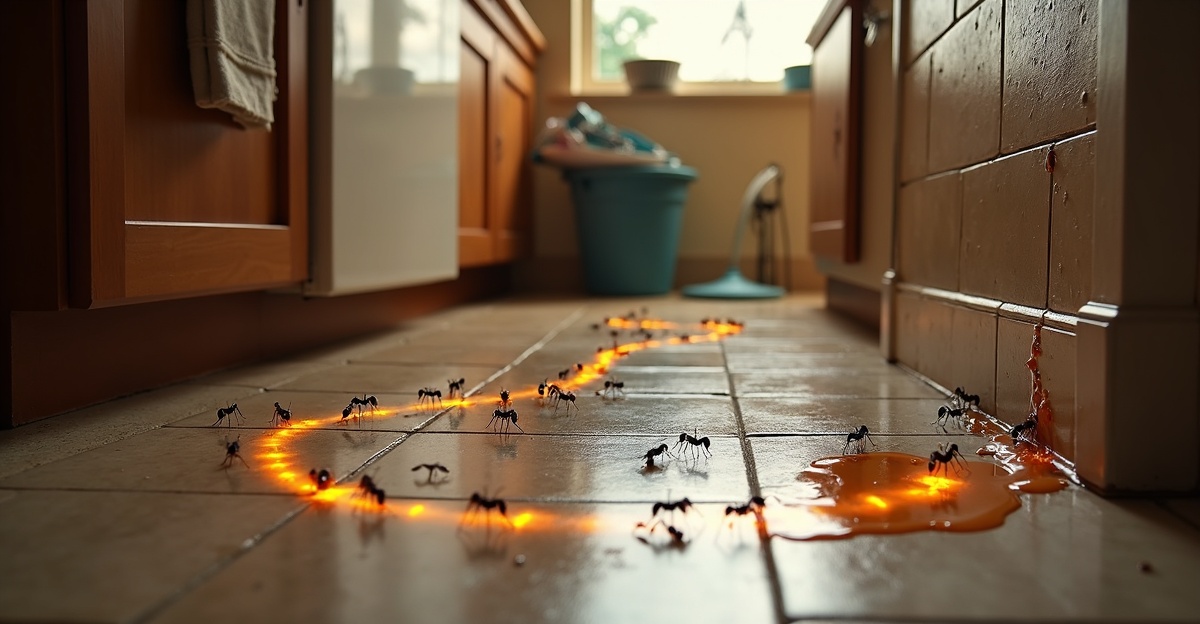
Ants don’t appear in neat lines across your floors by chance—an ant trail in house settings is a sign of something attracting them. They use scent-based signals called pheromones to guide each other straight to water or food. In Southeast Idaho, they often enter homes when outside temperatures rise or moisture becomes scarce—kitchens and bathrooms become prime targets.
Key Takeaways
- Ants create scent trails using pheromones to lead others from their colony to a discovered food or water source.
- These trails intensify with ant traffic—each pass strengthens the scent and invites more ants.
- Damp spots like under sinks, around leaking pipes, or in basements often support these scent trails.
- Sealing off entry points won’t fix the problem alone—scrubbing away the trail itself helps stop ants from coming back.
- Simple options like vinegar or soapy water break down scent trails and reduce the chances of a new one forming.
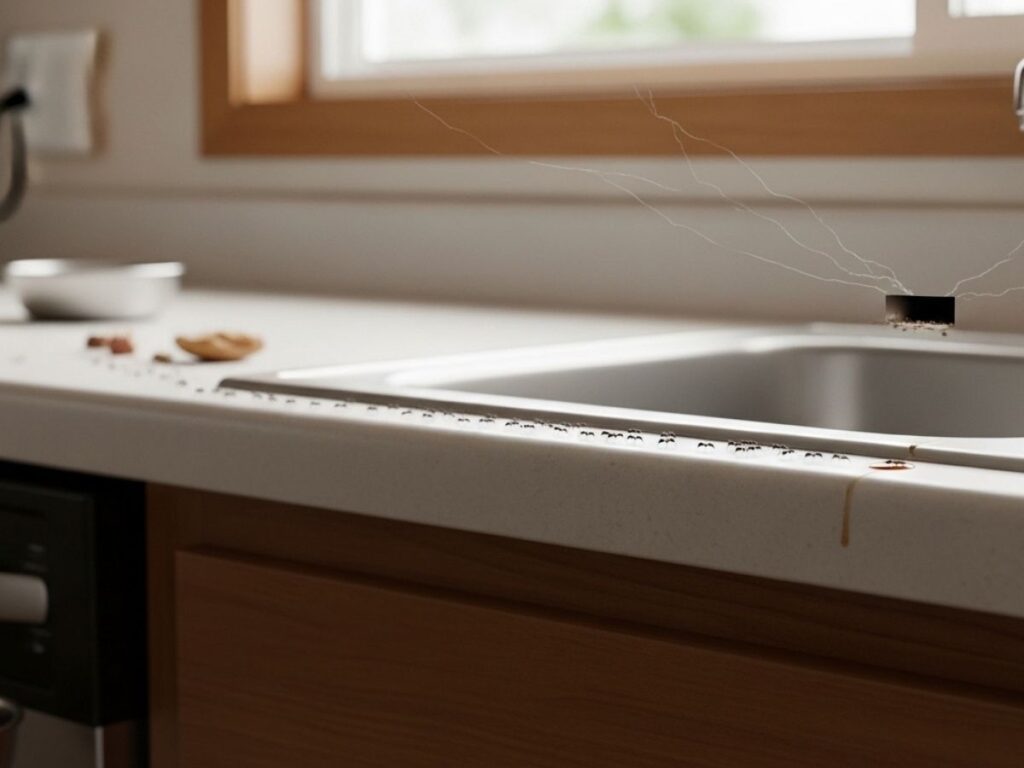
Why Ants Are Marching Into Southeast Idaho Homes
Ants don’t just wander into our homes by accident. Conditions in Southeast Idaho often push them inside, especially during spring rains or when summer heat dries out their outdoor water sources, a seasonal pattern noted by regional extension experts. When that happens, ants follow their instincts—and those invisible scent trails—right into our kitchens, bathrooms, or basements.
They come looking for a consistent water supply and easy meals. Even small things like pet food on the floor, bits of food in the trash, or drops of syrup on the counter can invite them in. Leaky pipes and damp wood behind sinks or in basements add to the draw, a moisture-related risk factor highlighted in integrated pest management guidance.
House ants in Idaho have another advantage: they’re experts at finding tiny openings—especially around window frames, which is why homeowners often look for ways to stop ants entering windows. Cracks in the foundation, gaps under doors, and even utility entries around the base of the home can serve as entry points. That’s one reason why residential pest control in Southeast Idaho is often an essential step to keeping homes ant-free.
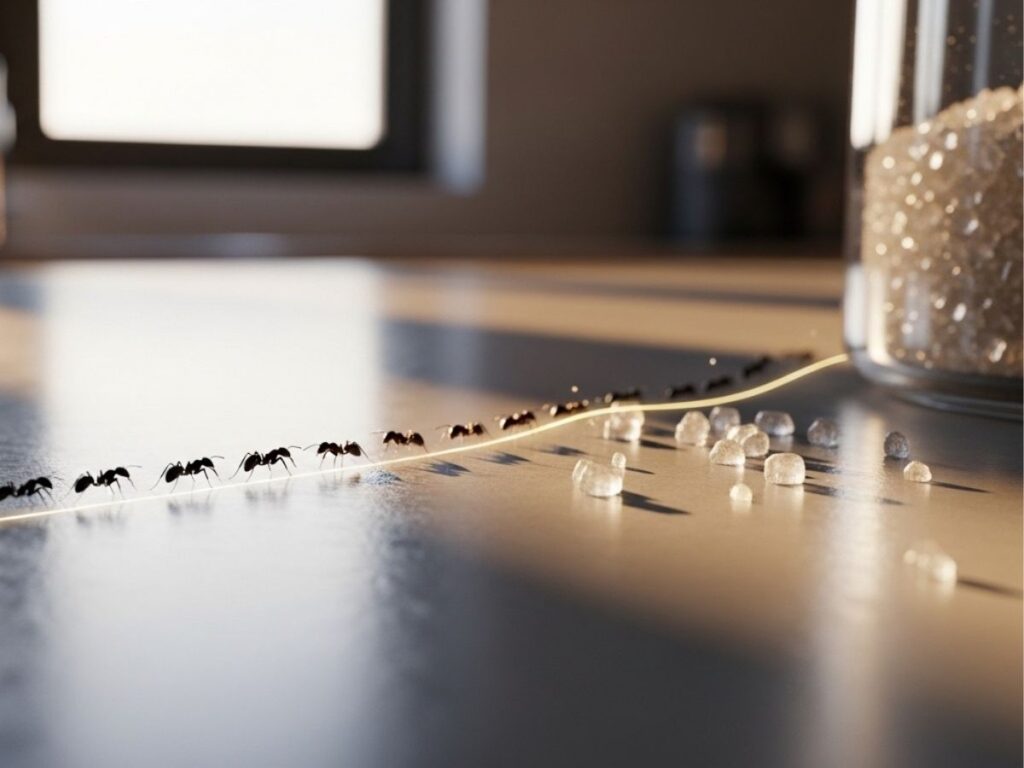
Why Ants Form Trails Indoors
When we see ants following each other in a line, it’s not just a coincidence—it’s strategy. Ants use a chemical trail, called a pheromone trail, to guide others from the colony to a food or water source, as explained by university entomology research on ant trail pheromones. Each ant adds to the scent of the trail as they move along it, reinforcing the message through the ants pheromone trail they leave behind: “good food this way!
That’s how what starts with one ant in your kitchen can turn into a bustling highway leading from your windowsill to the sugar jar overnight. These trails are invisible to us, but to ants, they’re a clearly marked road map—many people wonder how long do ant pheromone trails last once the path is established. And once they’ve found something worth sharing—a drop of juice, pet kibble under the table, crumbs behind an appliance—they don’t give up that path easily.
This behavior is especially common in areas like kitchens and bathrooms, where moisture and food often overlap. Curious about why ants are so drawn to these parts of the home? We dig deeper here.
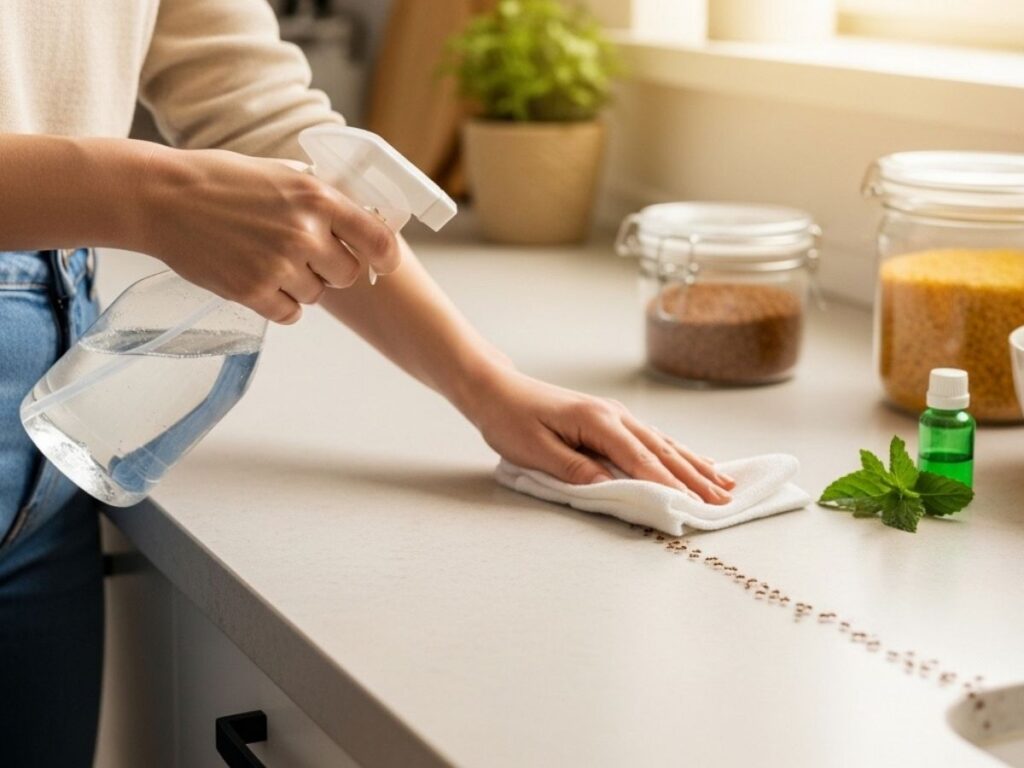
How to Break the Ant Trail—And Keep It From Coming Back
Simple steps to disrupt and protect your home
To stop ants from following each other in a line indoors and prevent them from coming back, try these home-safe tips:
- Use a gentle vinegar-water or soapy water solution to clean the ant trail. This erases the pheromone signal.
- Store food in sealed containers, sweep up crumbs quickly, and clean up sugary spills—even tiny ones.
- Check around windowsills, floorboards, plumbing, and wiring—it’s amazing how small an opening they need.
- Create safe deterrents. Essential oils like peppermint or citrus and even baking soda can act as natural blockers in lighter cases.
If you’ve got ants, be sure your ant control method covers both removal and prevention. If your treatment just clears the surface ants, they’ll keep coming. Here’s more on why ants keep coming back after treatment and how to solve it for good.
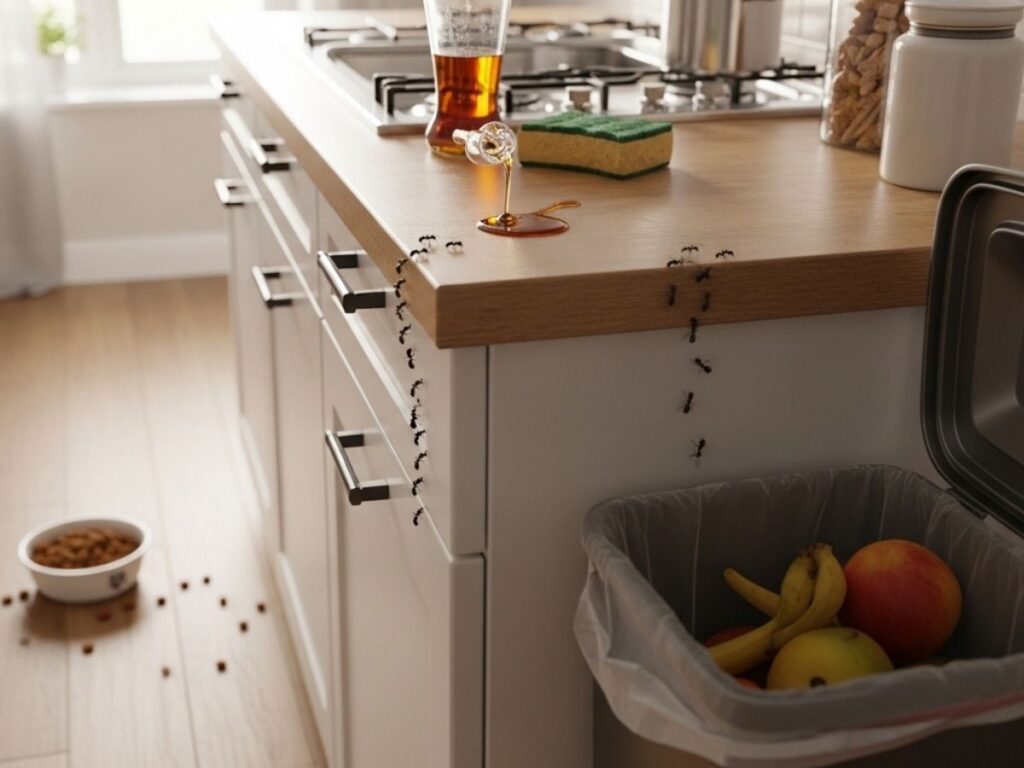
Everyday Habits That Might Be Inviting Ants In
Even homes that look spotless can have ant-attractive habits we might not realize.
Leaving pet food out overnight, forgetting to wipe up syrup spills, or tossing apple cores in an open trash bin all make it easier for ants to move in. Even behind-the-scenes areas like under the fridge or the sink can collect drops of moisture or lingering food smells.
In Idaho neighborhoods like Rexburg or Ammon, we often see ant trails starting near dish sponges, compost bins, or under-sink mats. Damp towels or water in plant saucers are other overlooked invitations.
Keeping things dry is just as important as keeping them clean. We often recommend:
- Running dehumidifiers in basements
- Moving firewood and brush away from your home’s foundation
- Trimming plants so they don’t touch exterior walls
Want a closer look at what draws ants in? We break it down fully here.
When DIY Isn’t Enough: What to Do If Ant Trails Keep Coming Back
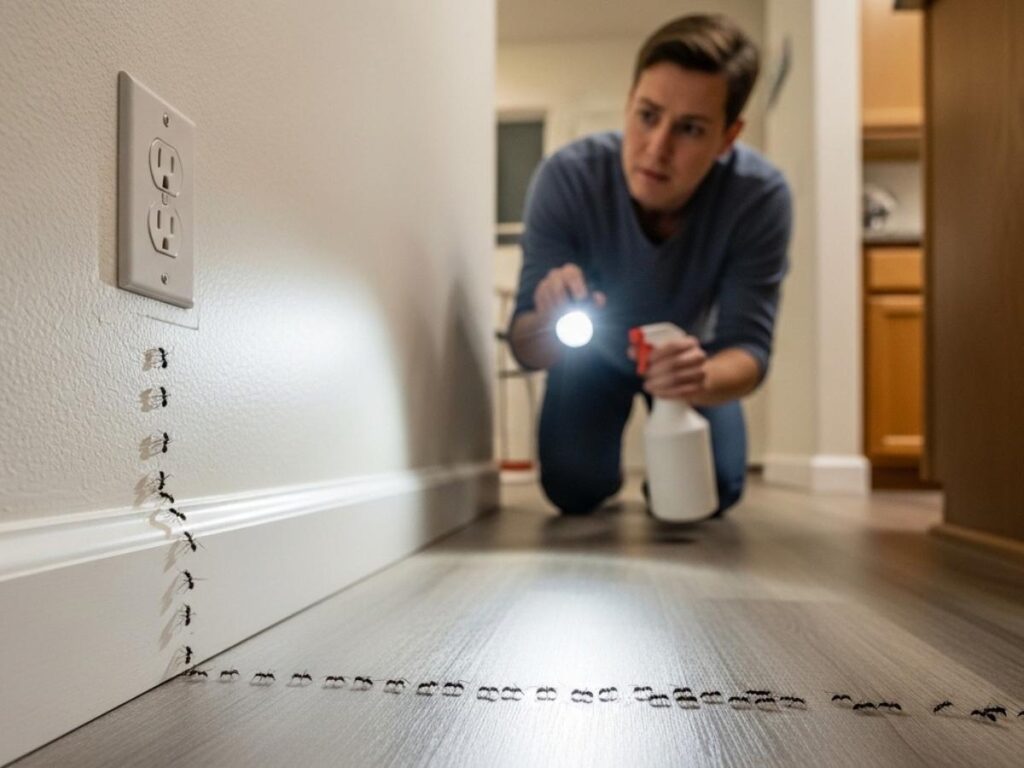
If you’ve cleaned, sprayed, blocked, and still the trails reappear—especially from outlets or along baseboards—you may be dealing with an indoor nest. That changes everything.
Colonies inside your walls require more than surface cleaning. Sometimes, over-the-counter sprays actually make problems worse by causing satellite colonies to split and spread, a phenomenon known as colony budding in ant management research. If the ants start rerouting after treatment, that’s a clear sign they’re nesting close by.
That’s where our experience comes in. We’ve handled ant infestations in Southeast Idaho homes of every size. Our approach focuses on safety, clarity, and giving you options that work—not just temporarily, but long-term. We use proven, professional-grade products that are safe for kids and pets, and we always provide straight answers—no scare tactics or surprise charges.
Still not sure where to start? Our post on how pest control companies treat for ants offers a clear picture of what to expect.
Safe, Local Help You Can Count On—Right When You Need It
At DeWebb Pest Control, We live and work right here in Southeast Idaho—so we understand what makes homes in Idaho Falls and surrounding communities vulnerable to pests. We’re not a faceless national chain—we’re your neighbors. And we’re here to make sure ants don’t disrupt your home or peace of mind.
Whether you’re battling seasonal invaders or dealing with a stubborn return of house ants, you can count on us for honest advice and effective solutions. If you’ve tried sealing, cleaning, or natural remedies without lasting results, let’s talk. A free visit from our team might be the easiest doorway to relief.
Explore our complete pest control services or reach out anytime to schedule a safe, local inspection. We’re always ready to help you stop ants in the kitchen—and wherever else they try to invade.
Frequently Asked Questions
Ants form trails indoors because they use pheromones to mark a reliable path to food or water—many homeowners ask do ants leave pheromone trails when they notice these lines across floors or counters. When one ant finds a resource, it lays down a chemical scent that others follow. Each passing ant reinforces the trail, making the line stronger and more attractive over time, especially in kitchens, bathrooms, and damp areas.
Kitchens and bathrooms attract ants because they combine food smells with moisture. Crumbs, sugary spills, pet food, and trash provide easy meals, while sinks, drains, and leaks offer water. Once ants locate these resources, they establish pheromone trails to guide the colony back repeatedly.
To remove ant trails permanently, you must erase both the ants and their pheromone scent. Cleaning the trail with vinegar, soapy water, or household cleaner breaks down the chemical signal. Sealing entry points, reducing moisture, and storing food properly help prevent ants from rebuilding the trail.
Ant trails do not always mean there is a nest indoors, but recurring trails can be a warning sign. If ants keep reappearing from walls, outlets, or baseboards despite cleaning, the colony may be nesting inside. Outdoor nests can also send trails indoors if food or water is consistently available.
Ant trails return when the underlying attraction is still present. Even after cleaning, leftover food residue, moisture, or accessible entry points can draw ants back. If the pheromone trail is not fully removed or the colony is nearby, ants may quickly re-establish the same path indoors.