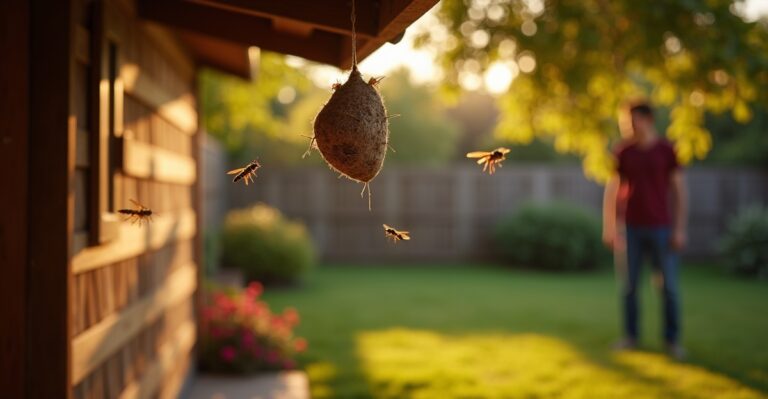
How to Safely Remove a Wasp Nest From Your Porch
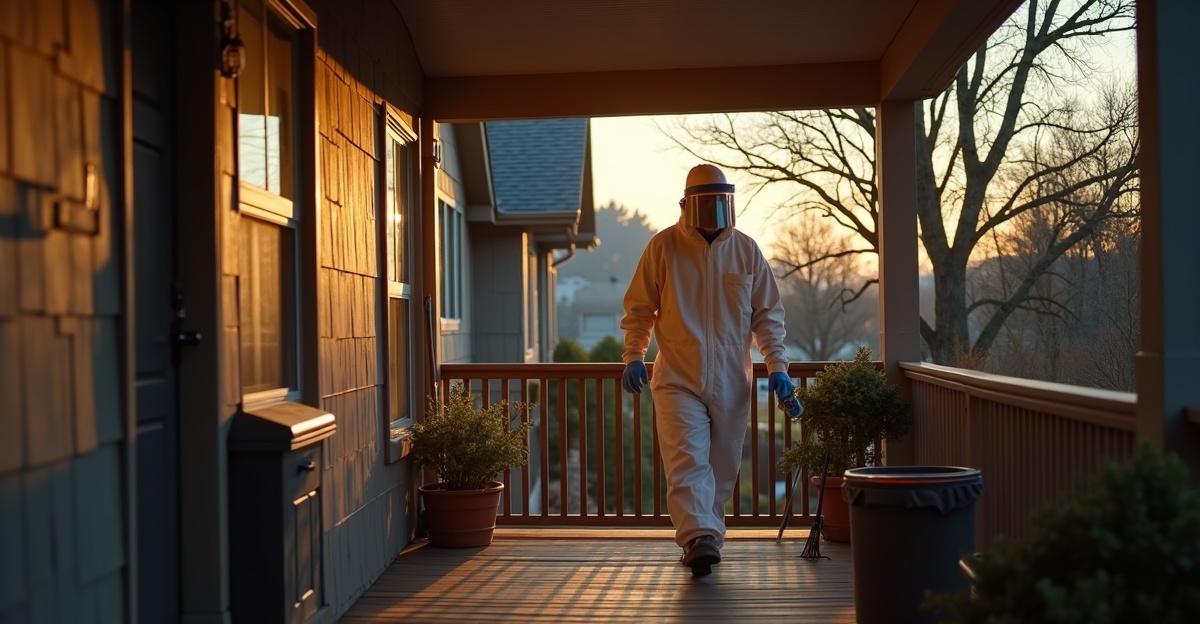
Dealing with wasps on the porch goes beyond just being an annoyance—it poses a safety concern, especially during Southeast Idaho’s wasp season. This guide offers clear, safe ways to remove wasp nests from porch areas and helps you decide if the job calls for a do-it-yourself approach or expert help.
Key Takeaways
- For smaller nests in open, easy-to-reach porch spots, wear protective clothing and act during cooler hours—early morning or late evening are best.
- Use wasp spray or a strong mix of soap and water on small nests. Watch the site after treatment to confirm the wasps are gone before taking the nest down.
- Stay clear of removing nests if they’re large, hidden, or if someone nearby has a wasp allergy.
- Call professionals for nests in tricky locations, signs of high wasp numbers, or if safety feels uncertain.
- Stop future nests by sealing porch crevices, keeping food areas clean, and checking your porch regularly during warmer seasons.
Signs It’s Time to Act: Is That Wasp Nest on Your Porch a Threat?
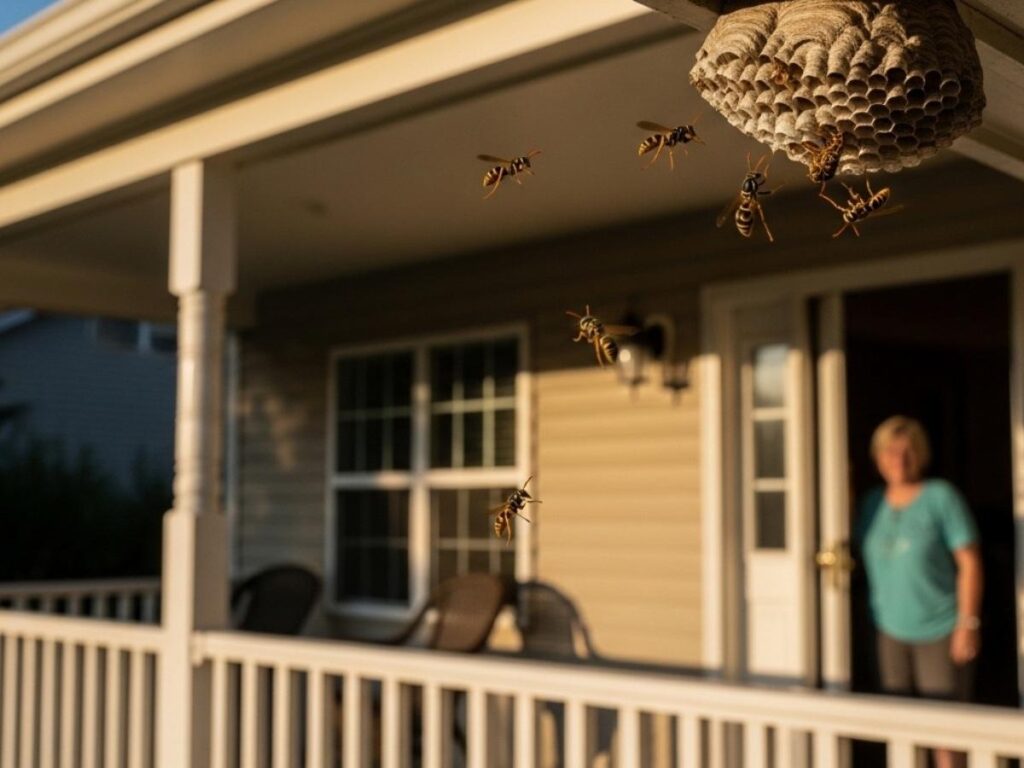
Wasps are a common sight during Southeast Idaho’s warmer months, especially from late spring through early fall. If you notice a papery, grayish structure shaped like an upside-down umbrella on or near your porch ceiling, eaves, or railings, chances are you’re looking at a wasp nest on porch surfaces. These nests often start small—golf ball-sized—but can grow rapidly.
In our region, the two most common porch pests in this category are paper wasps and yellowjackets. Paper wasps tend to build open-comb nests under roof edges or in porch corners, while yellowjackets usually go for enclosed, ground-level spots—or sometimes wall voids and deck rafters.
Now, let’s answer the big question: Are wasp nests dangerous? Yes, they can be. Wasps defend their nests aggressively if they feel threatened. A single nest can house dozens (sometimes hundreds) of wasps, and they won’t hesitate to sting multiple times. This risk increases for children, pets, or anyone allergic to stings.
Besides health concerns, nests in tricky spots—like behind siding or in roof eaves—can also create structural concerns. Hidden nests can lead to moisture retention or damage when not addressed promptly. Considering Southeast Idaho’s seasonal pest patterns, being on porch patrol from spring through early fall helps protect your home and family.
If you notice frequent wasp traffic around home entryways or detect early signs of a new nest, take action quickly. Knowing how to spot early signs of a wasp nest can make a big difference in handling the issue before it becomes a safety hazard.
DIY With Caution: When You Can (and Shouldn’t) Remove a Nest Yourself
While we respect a can-do attitude, safe wasp nest removal porch situations still require caution and preparation. There are a few situations where homeowners can handle safe wasp nest removal on their porch:
Consider DIY Only When Conditions Are Safe
You might try to remove a nest yourself if:
- The nest is small (less than a tennis ball),
- Located in an easy-to-reach spot,
- The wasps aren’t acting overly aggressive,
- You’re not allergic, and no one nearby is.
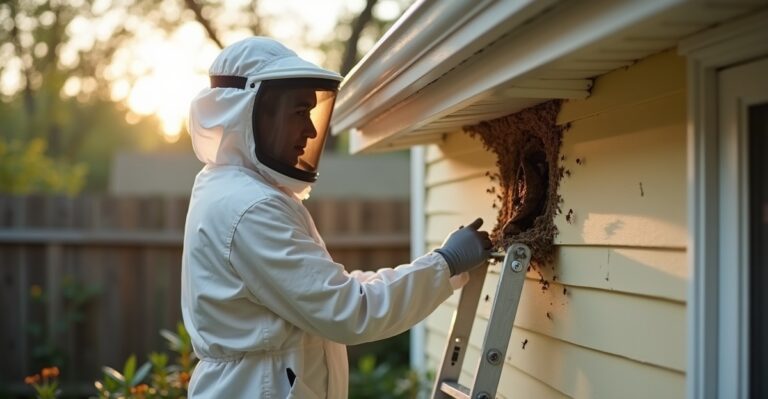
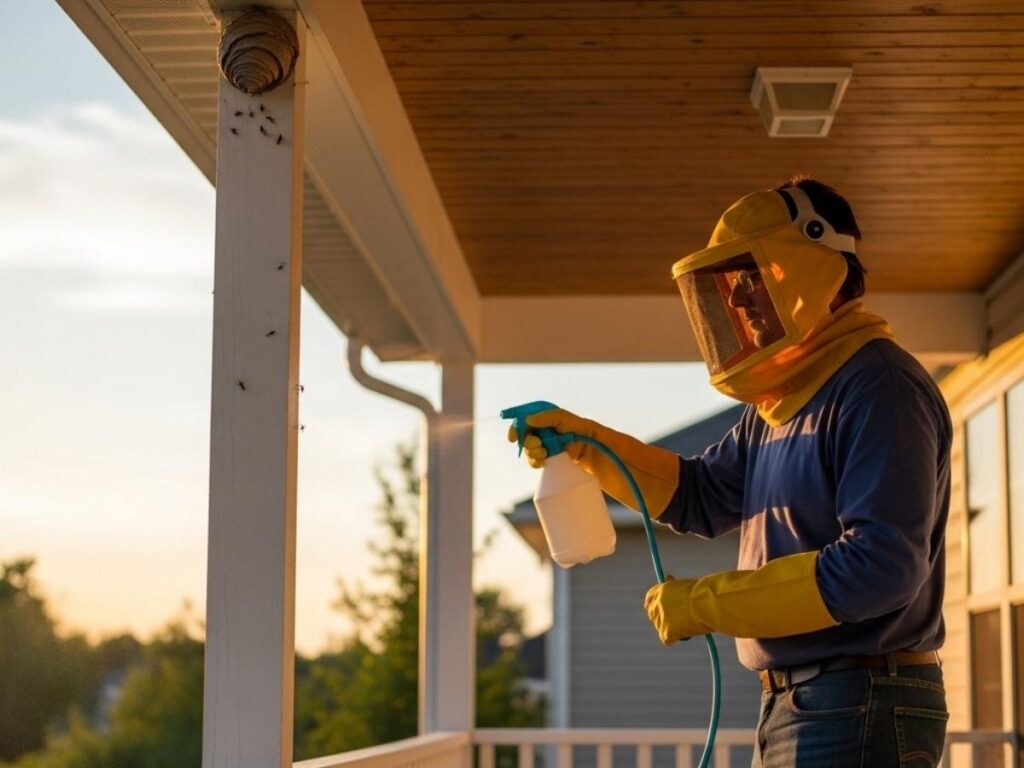
Always wear protective gear: long sleeves, pants, gloves, closed shoes, and a face covering or beekeeper-style hood. And always act when wasps are least active—sunrise or late evening, when they return from foraging.
Natural Methods You Can Try (With Limitations)
If you prefer getting rid of wasps naturally, a few approaches might work for minor infestations:
- Mix dish soap with water in a spray bottle—this clings to wasp wings and suffocates them.
- Peppermint oil mixed with water can act as a mild repellent.
- Hanging fake wasp nests may deter new colonies—though results vary.
That said, these methods aren’t foolproof. They’re best used as prevention or when dealing with a minimal threat.
Let’s be clear: Never go after a nest if:
- You’re allergic,
- The nest is large or hidden in a risky location,
- You’re unsure about the activity level.
“When in doubt, call it out.” A little caution goes a long way to keep everyone safe—including pets.
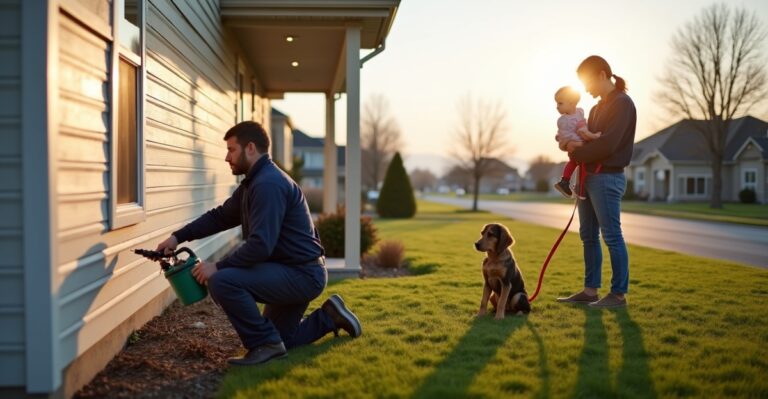
Need backup? Our team’s always available for wasp removal for families with pets or sensitive household needs.
Step-by-Step: How to Safely Remove a Small Wasp Nest from Your Porch
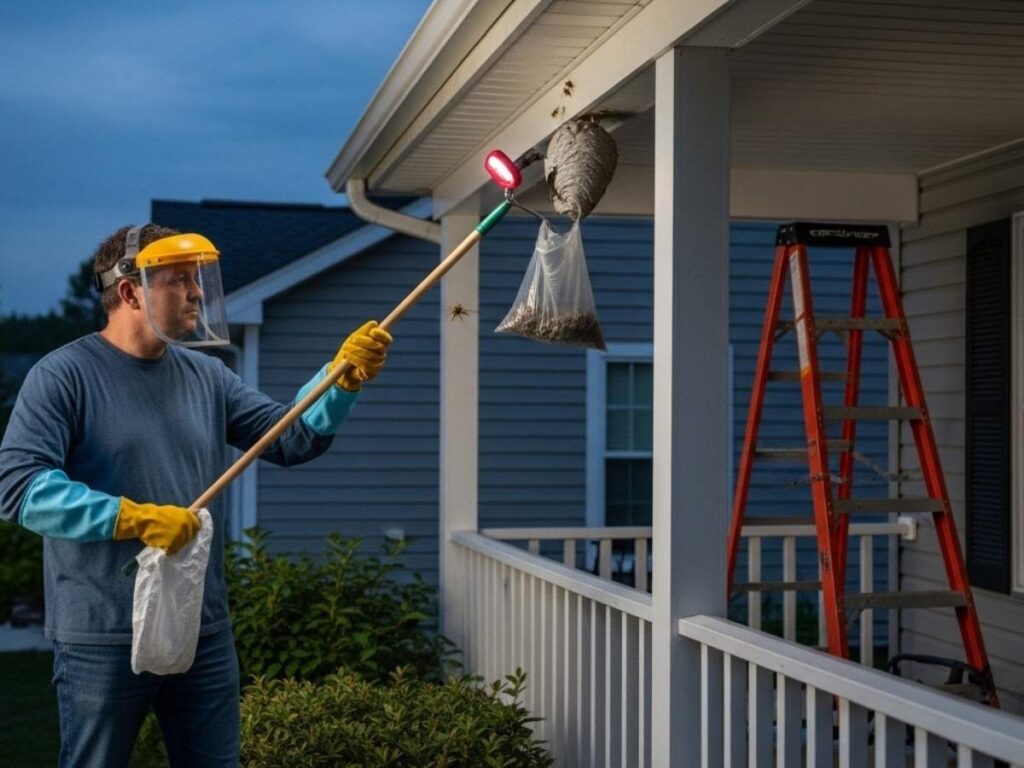
Some prefer trying it themselves with smaller nests—and we’re here to guide you safely if you make that choice. Here’s how to remove a wasp nest safely with minimal risk:
- Suit up: Wear thick, protective clothing that covers your skin completely—think long sleeves, jeans, gardening gloves, and something to protect your face and neck.
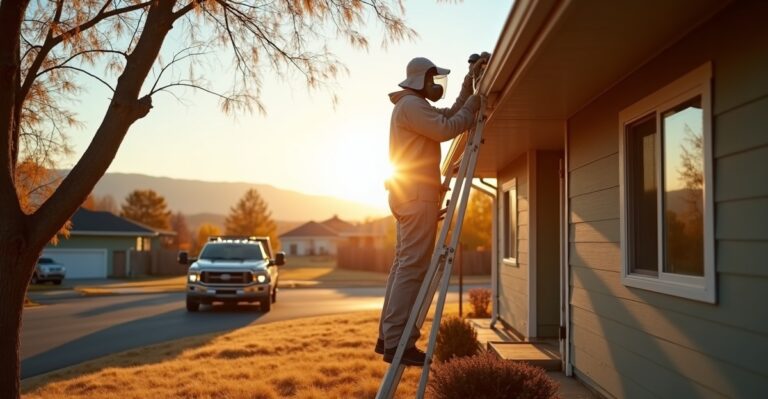
- Gather your tools: You’ll need a flashlight (red light is less likely to disturb them), a long spray applicator, a broom or long stick, and possibly a ladder (only if stable).
- Pick the right time: Head out just before sunrise or after sunset. Cooler morning/late evening temps help slow the wasps down.
- Spray or treat the nest: Use a wasp and hornet spray labeled for instant knockdown. For small nests, soapy water or peppermint oil may work, but be prepared to retreat if it’s ineffective.
- Wait and watch: Give it at least 24 hours. Observe from a safe distance. If you still see wasps flying in and out, do not proceed.
- Remove and seal: If inactive, gently knock down the nest using a long broom or stick. Place it immediately into a sealed plastic bag and dispose of it outside, away from your home.
Never attempt this method on nests larger than a tennis ball or in tough-to-reach areas. Pest control in Idaho Falls can be just a call away—and often the smarter, safer option.
Warning Signs It’s Time to Call the Experts
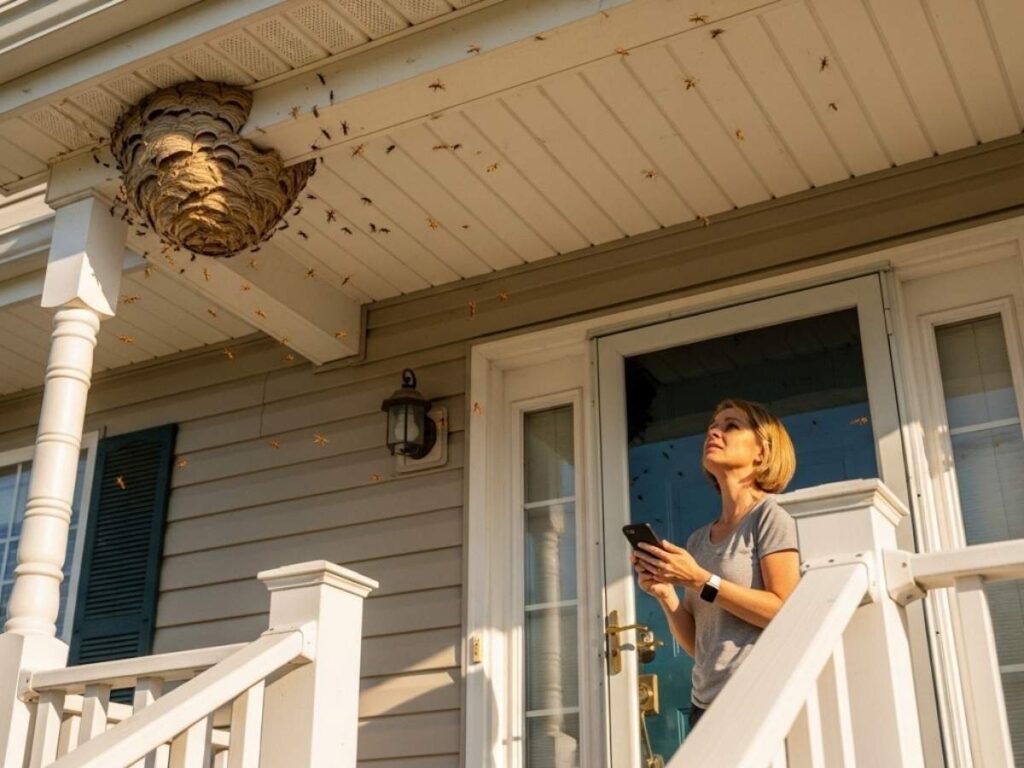
Some nest scenarios are best left to professionals. If you’re unsure whether to handle it solo, here’s when we strongly recommend calling for help:
- The nest is bigger than a tennis ball or houses a large number of wasps.
- It’s built near doorways, walkways, decks, or anywhere you or your family pass often.
- You can’t safely access it, such as nests under siding, in attics, or along high roof edges.
- Someone in your home has a known wasp allergy.
- Kids or older adults live in the home and could be at higher risk.
It’s not overreacting to bring in help—it’s proactive. These are common situations we see throughout Southeast Idaho and ones where homeowners choose safety first. Knowing why wasps keep coming back every summer also helps make the case for long-term prevention.
Looking for a wasp control expert near you in Southeast Idaho? We’ve got you covered with responsive service and real results.
What to Expect from Professional Wasp Removal with DeWebb Pest Control
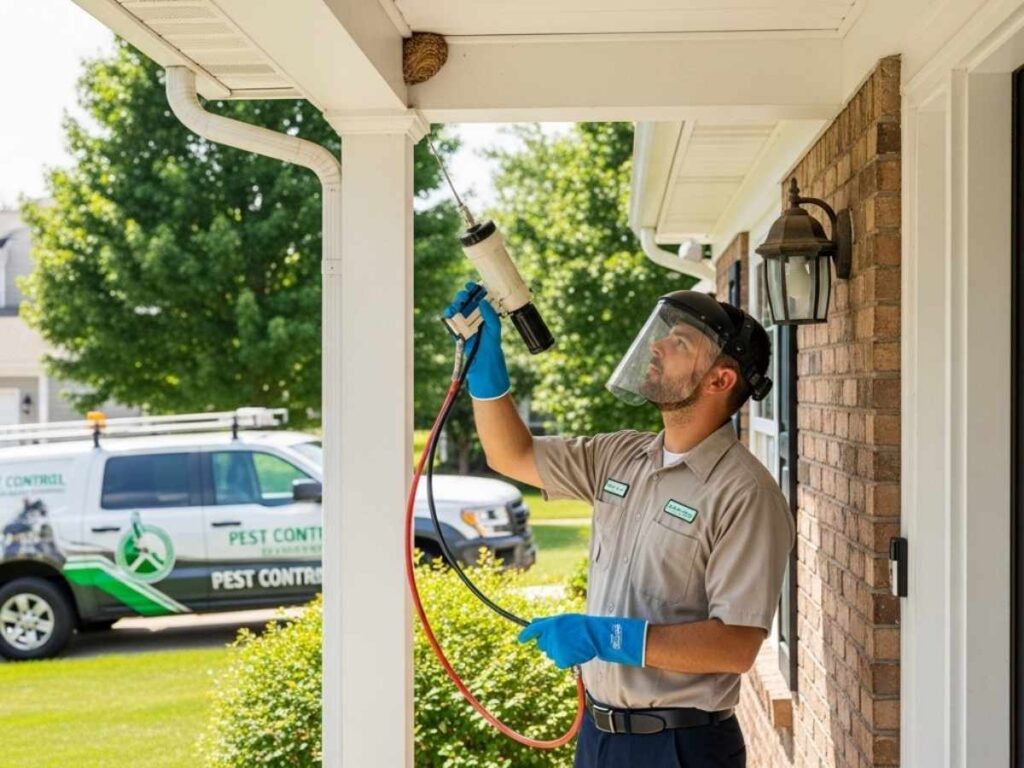
Our approach to wasp removal focuses on your safety and peace of mind. Here’s what happens when you work with us:
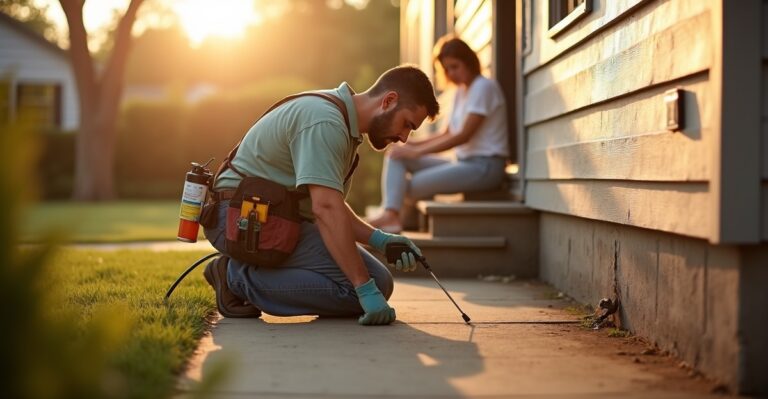
- We start with a thorough inspection—identifying wasp type, nest size, and entrance points.
- We use EPA-approved treatments, minimizing chemical exposure while staying highly effective.
- You’ll also get personalized tips to keep wasps from rebuilding and learn which areas of your home might invite fresh nesting activity.
With experience removing wasps from homes in Idaho Falls, Rexburg, and Pocatello, we understand how local climate shifts and building conditions affect wasp behavior. Whether it’s paper wasps or hornets threatening your porch, we know what we’re facing.
As one of our technicians put it: “We treat every home like it’s our own. Your kids and pets’ safety comes first. That’s our top priority every single time.”
Want a handy summary? Ask us for “Your Front Porch Safety Checklist” during your next visit—it’s free, and it makes wasp monitoring much easier for the season ahead.
For wasp removal professional service that’s built on trust and local know-how, DeWebb is ready to help.
Keeping Your Porch Wasp-Free All Season Long
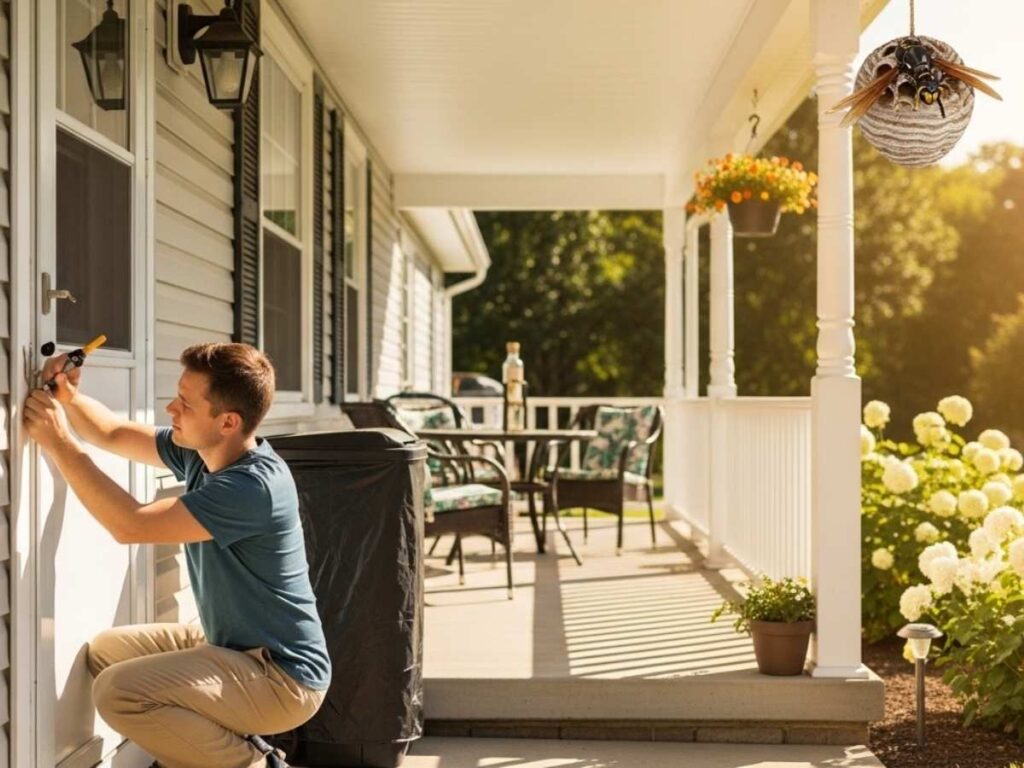
Prevention makes wasp problems easier to handle and teaches you how to deter wasps from porch areas, keeping your summer plans uninterrupted. Here are some practical, porch-focused tips to reduce wasp issues:
Simple Ways to Keep Wasps Away
Do these regularly during spring and summer:
- Seal any cracks or gaps in porch joints, eaves, or trim boards.
- Clean up drinks and food wastes, especially at outdoor gatherings.
- Cover garbage cans tightly and rinse recyclables.
- Install decoy nests—wasps often won’t build near what looks like a rival colony.
- Inspect your porch and surrounding areas weekly for new activity.
For complete home defense, check out what to expect from our residential pest protection plan. It includes seasonal inspections and guidance tailored to your property.
And remember, nests can be reused. Curious about that? See why wasps don’t always abandon old nests.
If you notice a wasp nest forming, or even think one might be nearby, don’t brush it off. A quick, safe response saves trouble later. For fast, local help, give DeWebb a call. Let’s keep your porch peaceful and sting-free all season.
Frequently Asked Questions
The safest way is to remove small, visible nests during early morning or late evening when wasps are least active. Wear full protective clothing and use a wasp-specific spray or a soap-and-water solution. Always observe the nest for 24 hours after treatment to ensure activity has stopped before removal.
You can handle safe wasp nest removal on a porch only if the nest is small, easy to reach, and no one nearby has a sting allergy. DIY removal becomes unsafe with large nests, hidden locations, or aggressive wasp behavior, which increases the risk of multiple stings.
You should call a professional if the nest is larger than a tennis ball, located near doors or walkways, hidden in walls or eaves, or if anyone in the home is allergic to wasp stings. Professional removal reduces injury risk and ensures complete nest elimination.
Removing a nest helps immediately, but it doesn’t guarantee wasps won’t return. Wasps may rebuild nearby if attractants remain. Sealing cracks, keeping food areas clean, and regular porch inspections are essential steps to prevent future nesting.
Yes, leaving a wasp nest on a porch can be dangerous. Wasps aggressively defend nests and may sting repeatedly if disturbed. The risk increases near entryways, children, pets, or high-traffic areas, making prompt and safe removal important for household safety.